Jeff Nickerson, Technical Roofing Consultant
Last Updated: July 2026
The Quick Answer
For most Phoenix-area homes, tile is the more common and practical choice. It fits the Southwest look, is widely accepted by many HOAs, and performs well when the underlayment and installation are done correctly.
Metal roofing can be a strong long-term alternative when the home, HOA, budget, and design all line up. From a performance standpoint, metal may have the edge if cost and neighborhood requirements are not major concerns.
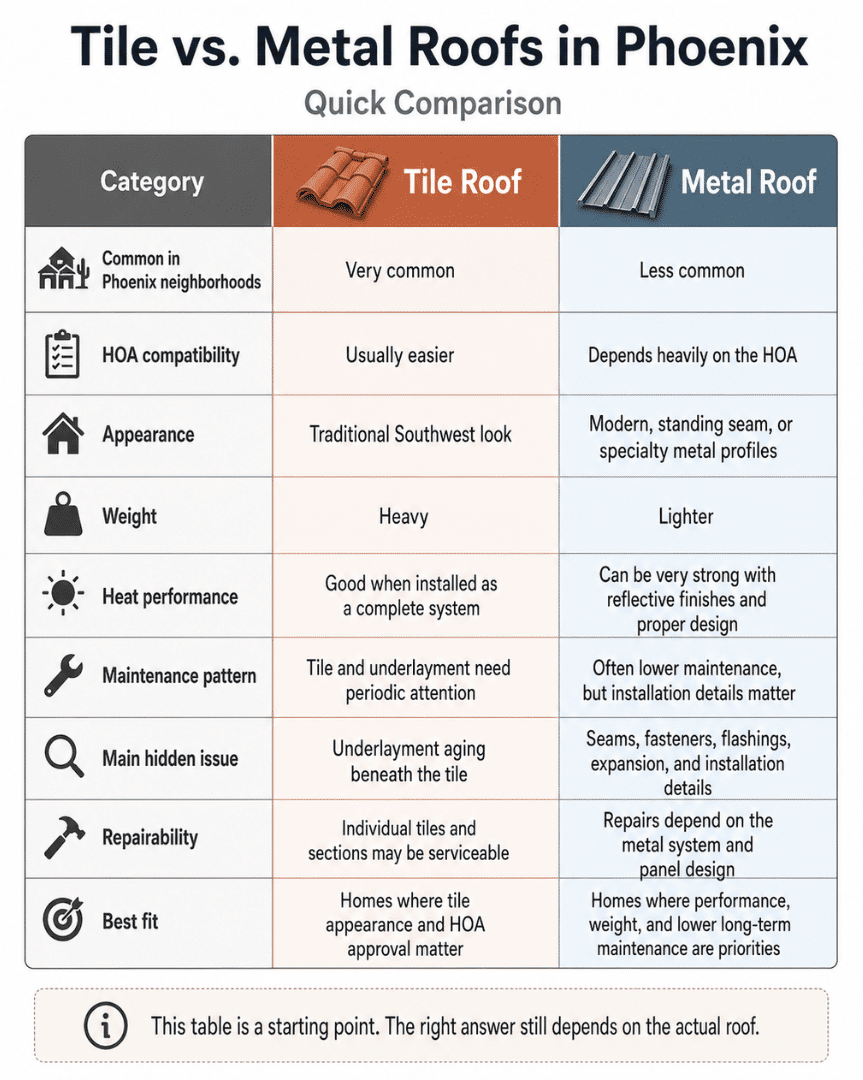
A simple way to think about it is this: tile often wins on fit. Metal often wins on long-term performance.
The better choice depends on your home, your HOA, your budget, your long-term plans, and how much future roof maintenance you want to deal with.
Why This Is a Hard Comparison for Phoenix Homeowners
Tile and metal are both legitimate roofing options in Arizona, but homeowners are often comparing more than materials.
They are comparing appearance, HOA rules, upfront cost, long-term maintenance, and how the roof will fit the home.
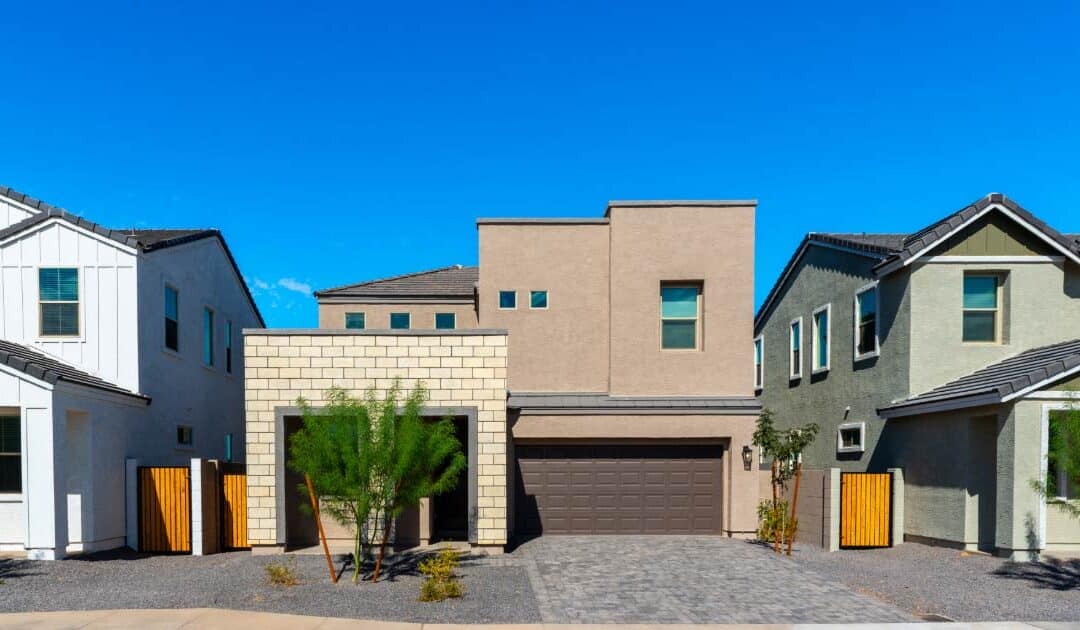
Tile is familiar across many Phoenix, Scottsdale, Chandler, Mesa, Gilbert, and Peoria neighborhoods. It fits the Southwest look, is widely accepted in many HOA communities, and often matches the homes around it. For many homeowners, tile feels like the natural choice because it already belongs architecturally.
Metal is less common on residential homes, but it can be a strong long-term performer when the home, design, budget, and HOA requirements line up. It is lighter than tile, can handle heat well with the right finish, and may reduce the need for some of the major underlayment-related work tile roofs eventually require.
That is what makes the comparison difficult.
Tile may fit the home better today. Metal may perform better over the long term. Tile may be easier to approve in an HOA neighborhood. Metal may appeal to homeowners who want a lighter roof system with fewer future interventions. Tile may have a lower upfront barrier in some communities. Metal may make more sense for homeowners planning to stay long term.
The better question is not just which material is better. It is which roofing system fits your home, your neighborhood, your budget, and how long you plan to stay.
Before You Compare Tile and Metal, Avoid This Mistake
Homeowners usually run into problems when they compare tile and metal only by appearance, price, or a simple lifespan claim.
The better comparison is the full roof system.
With tile, that means understanding that the tile is not the main waterproofing layer. The underlayment beneath the tile matters heavily, especially in Phoenix heat and monsoon conditions.
With metal, that means understanding that not all metal roofs are the same. Standing seam, exposed-fastener metal, and stone-coated metal systems can look different, perform differently, and require different installation details.
HOA rules also matter. Some homeowners may like the idea of metal, but the neighborhood or HOA may require tile or limit which metal products are allowed. That should be checked before getting too far into the decision.
Price can also be misleading. A cheaper quote may not include the same underlayment, flashing details, ventilation, warranty, or installation scope. A higher quote may reflect a more complete system, or it may simply be higher. The only way to know is to compare what is actually included.
Before choosing between tile and metal, ask your contractor whether your HOA allows the system, whether your home can support the material, what underlayment is included, how penetrations and transitions will be handled, what maintenance to expect, and what warranty covers the material and installation.
Those questions help you compare the actual roof system, not just the material label.
What Homeowners Often Misunderstand About Tile Roofs
Many homeowners think the tile is what makes the roof waterproof. It is not that simple.
The tile is the visible protective layer. It helps shed water, protects parts of the roof system from direct sun, and gives the home its appearance. But the underlayment beneath the tile is the main waterproofing layer protecting the roof deck and the inside of the home.
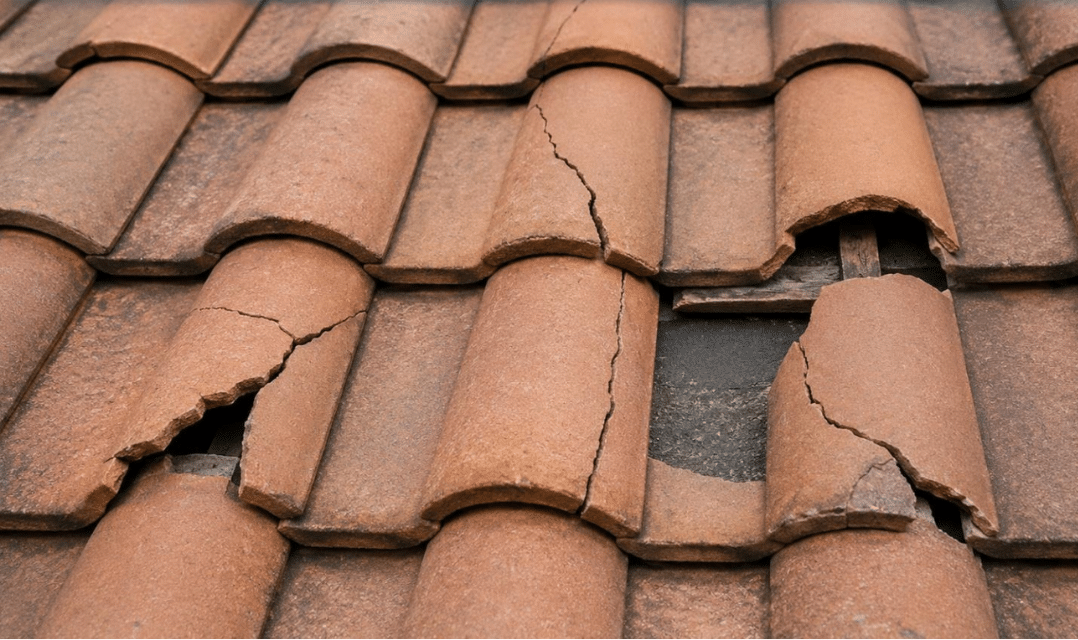
That matters in Phoenix because tile can often last much longer than the underlayment beneath it. A tile roof may look fine from the ground, but the underlayment can be aging, brittle, cracked, or failing underneath. When that happens, leaks may appear even though the tile itself still looks good.
This is why two tile roof proposals can be very different. One contractor may be quoting basic underlayment. Another may be quoting a higher-grade underlayment, upgraded flashing details, new battens, bird stops, or a more complete reset.
The visible tile matters, but the hidden system matters more than most homeowners realize.
[For more on this, see our article on What Is the Best Tile Roof Underlayment for Phoenix Homes.]

What Homeowners Often Misunderstand About Metal Roofs
Metal roofs are durable, but they are not magical.
Metal roofs are sometimes promoted as “lifetime roofs.” Contractors need to be careful with that phrase. In Arizona, no roof should be treated as maintenance-free forever. A well-installed metal roof may need far less attention than some other roof systems, but it should still be inspected periodically, especially if trees, branches, debris, solar work, or other roof activity affects the system.
A properly installed metal roof can be a strong long-term option. But metal roofing depends heavily on the details: panel design, fastener type, seams, flashings, expansion and contraction, penetrations, roof slope, and the installer’s experience.
In Phoenix, heat causes building materials to expand and contract. Metal roofing systems are designed with that movement in mind, but they need to be installed correctly. Poor detailing around seams, penetrations, edges, and transitions can create problems later.
This is especially important because a homeowner may hear “metal roof” and assume all metal systems perform the same way. They do not. A standing seam metal roof, exposed-fastener metal roof, and stone-coated steel roof can look and function differently. The system being proposed matters.

Metal Ownership Details to Understand
Metal roofs are not noisy all the time, but they can make occasional sounds. In Phoenix, metal panels expand and contract as temperatures change. Some homeowners may hear popping, ticking, or creaking during quick temperature swings. Proper installation, decking, attic space, and insulation can reduce how noticeable those sounds are, and many homeowners rarely notice them after the roof is installed.
Rain and hail can also sound louder on a metal roof than on some other roofing systems. In Phoenix, that is usually less of a daily concern than it would be in wetter climates, but it is still part of the ownership experience.
Homeowners should also understand oil canning. Oil canning is visible waviness or distortion that can appear in metal panels. It does not necessarily mean the roof is failing, but it can affect the way the roof looks. Panel width, metal gauge, stiffener ribs, color, and installation details can all influence how noticeable it is.
These are not reasons to avoid metal automatically. They are reasons to discuss expectations before installation.
Can a Metal Roof Look Like Tile?
Some metal roofing systems are designed to create a tile-like appearance. These are often called stone-coated steel roofs or metal tile systems. They can give homeowners some of the visual character of tile while offering the lighter weight and durability of a metal roofing product.
But they are not the same as a traditional tile roof.
A metal tile-style roof is installed and maintained as a metal roofing system. It has different attachment methods, flashing details, expansion behavior, and repair considerations than concrete or clay tile.
It may or may not be approved by your HOA. If you are considering a metal product that looks like tile, ask the contractor how it is installed, how repairs are handled, what warranty applies, and whether your HOA allows it.
Cost Over Time: Tile and Metal Are Paid for Differently
Tile and metal roofing can both be significant investments. The important difference is not just the initial price. It is how the roof may need attention over time.
With a tile roof, the tile may remain usable for a long time. But the underlayment beneath the tile usually has a shorter service life than the tile itself.
That means a homeowner may eventually need a tile lift-and-reset or underlayment replacement. In that process, the tile is removed, the old underlayment is replaced, damaged components are corrected, and the tile is reinstalled when possible.
The tile may be reused, but the project still involves significant labor. This is why a tile roof can be both long-lasting and still require major work during the life of the home. You may not be replacing the visible tile every time, but you may still need to replace the hidden waterproofing layer beneath it.
A properly installed metal roof may require fewer major interventions than a tile roof that needs periodic underlayment replacement. That can make metal appealing for homeowners who want a longer-term system with less disruption.
But this depends on the specific product, installation quality, roof design, and maintenance. Metal should not be chosen just because someone says it “lasts forever.” No roofing system should be treated that way.
A metal roof should also include the correct high-temperature underlayment. Using a cheap underlayment beneath an expensive metal roof defeats the purpose of investing in a premium system.
Heat, Storms, and Maintenance in Phoenix
Both tile and metal can perform well in Phoenix heat, but they do it differently.
Tile has thermal mass and can allow some airflow beneath the tiles when installed correctly. Metal roofing can reflect solar energy effectively when the color, coating, and finish are designed for that purpose.
But heat performance is not only about the material. It also depends on roof color, ventilation, attic conditions, insulation, roof slope, underlayment, and installation quality. A well-designed roof system matters more than a simple “tile is cooler” or “metal is cooler” claim.
Both systems can also handle Phoenix monsoon conditions when installed properly.
Tile roofs can perform well, but individual tiles can crack, slip, or break. Wind-driven rain can also get beneath the tile, which is why underlayment and flashing details are so important.
Metal roofs can be very strong in storm and wind conditions when properly designed and installed. The system needs correct seams, fasteners, edges, flashing, and expansion details. If those details are wrong, leaks can still happen.
One main caution with metal is hail. Large hail is not one of the most common Phoenix roofing problems, but it can happen. When it does, metal panels may dent or dimple. Panels can often be replaced, especially on a newer roof, but color matching may be harder on an older roof because the existing panels may have faded over time.
The honest answer is that heat and storm performance depend less on the material name and more on whether the entire roof system was designed and installed correctly.
When Tile Roofing Makes More Sense
Tile may be the better fit if your home already has tile, your HOA requires or strongly prefers tile, you want the traditional Southwest look, your home’s structure was designed for tile, and you are comfortable with future underlayment maintenance or replacement.
For many Phoenix homeowners, tile is the practical choice because it matches the home, the neighborhood, and HOA expectations.
Our view is that tile usually wins for cosmetic, architectural, and neighborhood reasons rather than because it automatically outperforms metal over the long term. That does not make tile a bad choice. It means tile often fits the realities of Phoenix neighborhoods.
When Metal Roofing Makes More Sense
Metal may be the better fit if your HOA allows it, you want a lighter roof system, you prefer a lower-maintenance roof option, you are focused on long-term performance, and your roof design works well with the metal system being proposed.
Metal is usually chosen for performance, weight, and long-term ownership experience rather than tradition.
Before choosing metal, make sure the contractor explains the specific system, not just the material category. Ask about seams, fasteners, flashings, penetrations, expansion, ventilation, finish, warranty, underlayment, noise, oil canning, and HOA approval.
Bottom Line
There is no universally better choice between tile and metal roofing in Phoenix.
Tile is the standard for many Phoenix-area homes because it fits the architecture, satisfies many HOA expectations, and performs well when the underlayment and installation are done correctly.
Metal is a strong alternative when the home, neighborhood, HOA, and budget fit the system. If those factors line up, metal may be the stronger long-term performance choice. But it still needs proper installation, the right underlayment, occasional inspection, and realistic expectations around noise, hail dents, and cosmetic issues such as oil canning.
The right choice comes down to your home, your neighborhood, your long-term plans, and the details of the roof system being proposed.
What to Do Next
If you are deciding between tile and metal, start with the roof you have, the neighborhood you live in, and the goals you care about most.
At Raving Roofs, we inspect the roof, explain what your home can support, discuss HOA and design considerations, and walk you through the tradeoffs between materials, underlayment, maintenance, warranties, and long-term performance.
The goal is not to push one material over another. The goal is to help you understand which roof system makes the most sense for your home.