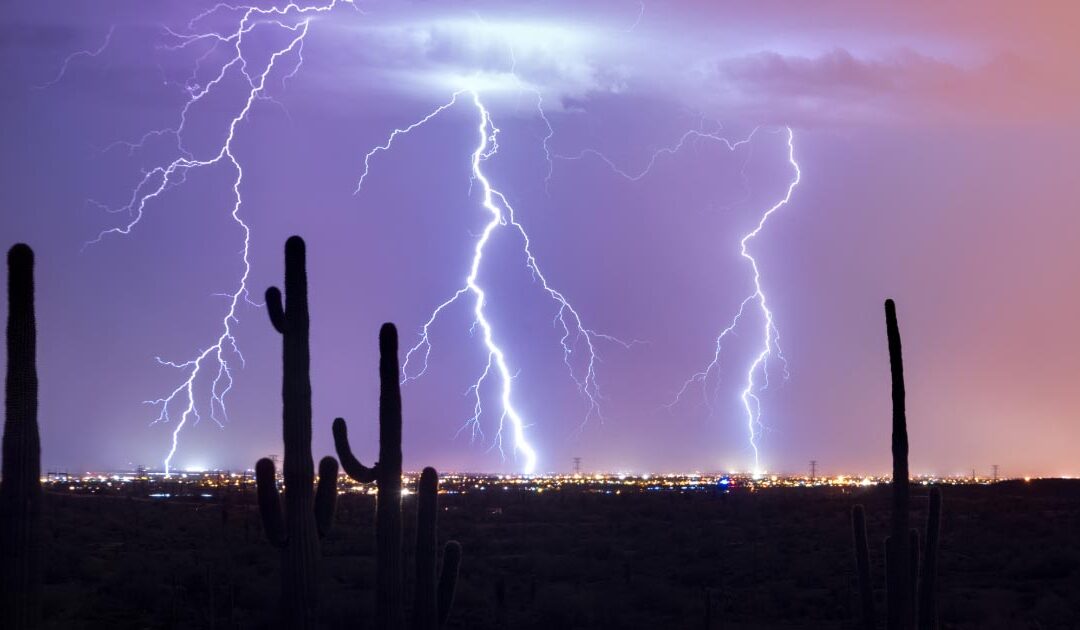
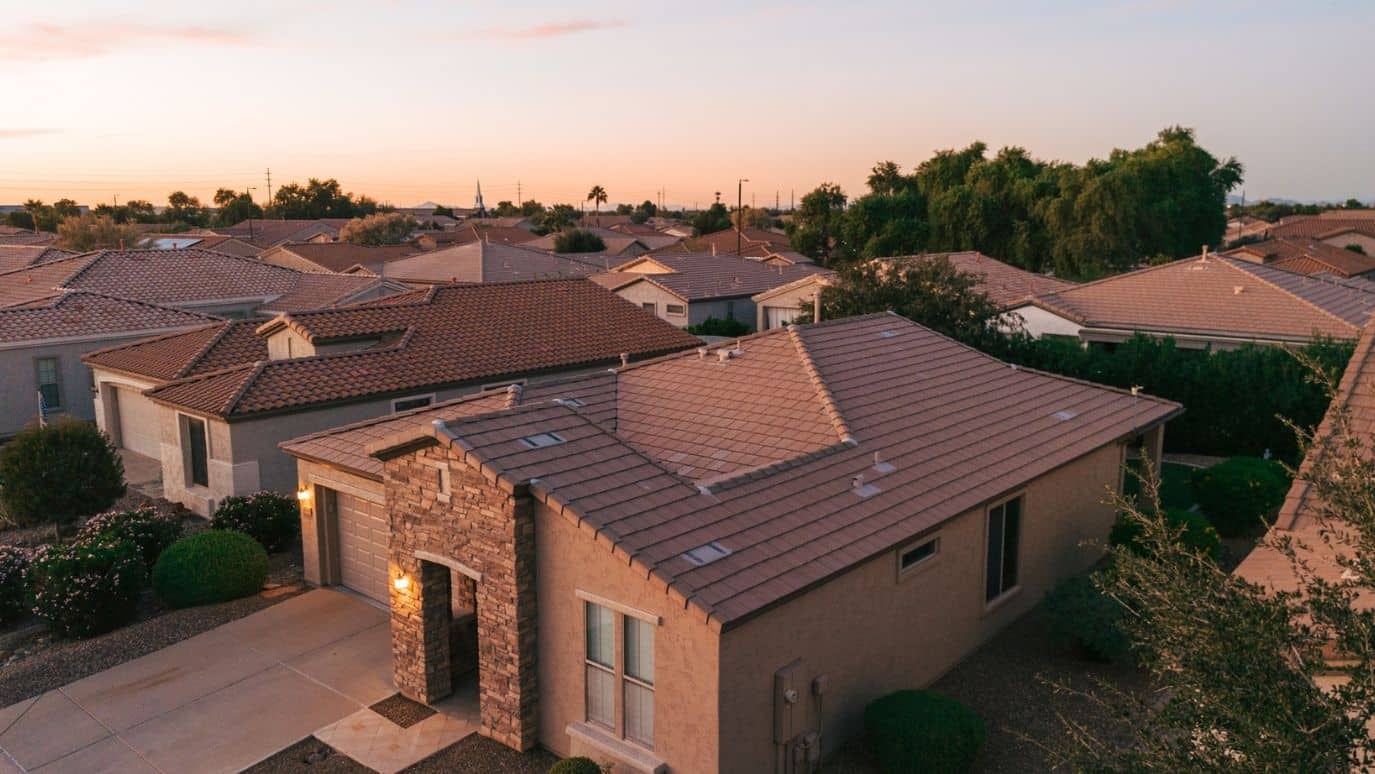
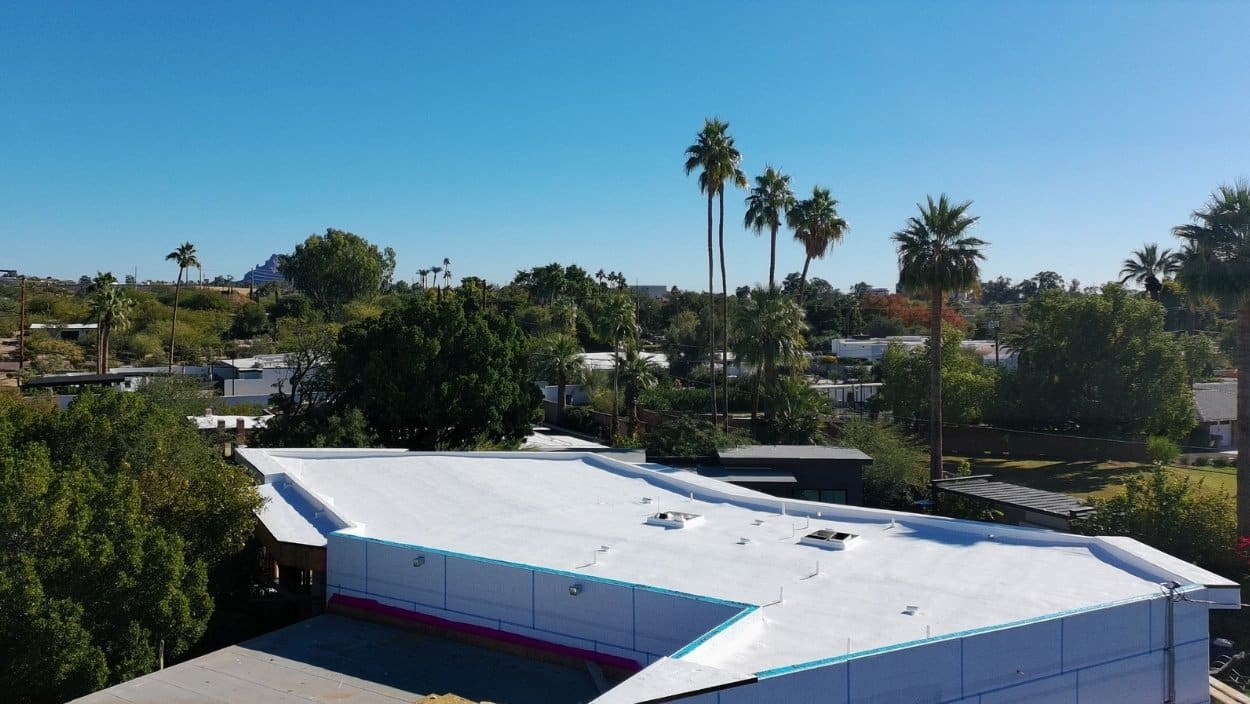
June 15 is the official start to the Arizona Monsoon season. What does that mean to the Arizona homeowner? If you look at the past few years, not much! However, over the next 30 days or so increased humidity, the chance of monsoon storms, and the dreaded dust storms will undoubtedly increase.
Monsoon storms vary in strength and the resulting damages can vary widely. While most roofs will see no damage, some will experience a leaky roof from a torrential downpour. Strong winds or in extreme cases a micro-bursts can blow off a roof or knock down a tree causing exposure to the elements. This can become an emergency requiring immediate assistance.
How to prepare for the dreaded storms
Roof Inspection
Before the actual monsoons start, take a look at your roof from the ground to see if there are any visible issues. If any items are noted, it’s a good idea to call in a pro before it’s a bigger problem. 10–20+-year-old roofs beg a roof inspection by a roofing contractor as recommended to ensure any potential issues are caught and addressed. Or you had the inkling that you have an impending roof issue, do not hesitate to call on a roofing company to provide a quote for roof repairs. Dealing with roof issues before they make it into your living room or office is much less stressful for all involved!
Verify Insurance
Ensure you are familiar with what your insurance policy covers regarding storm and water damage. It’s also a good idea to have your agent information is readily available. Most carriers will dispatch an emergency water damage service, but they may not cover the costs if it’s due to wear and tear or lack of maintenance.
Landscaping
Trees that are within 6 feet of a building have a good chance of contacting the roofing in a monsoon storm. Roof tiles or shingles can be pulled off or damaged by trees swinging in the wind. Reduce the risk of tree damage by pruning back any large limbs near or overhanging the roof.
Enjoy
Once you have checked off all the recommended preparation tips, now it’s time to sit back and enjoy the phenomenal nature show! Some of the most scenic views Arizona has to offer are put on a show during the monsoon season.
If the need arises for a qualified roofing company to advise you on your home or business, RENCO Roofing is your roofing company to call for roof repairs or replacement. We also provide roof maintenance and roof cleanings. You do not need to wait for the leaks, call 602-867-9386 for a free roof consultation. No job is too large or too small, we cover it all!
Frequently Asked Questions
Find answers to the most common questions about RENCO Roofing's residential services.
3
2Is a roof leak an emergency, or can it wait a few days?
If your roof is actively leaking during rain, it should be treated as urgent. Even small leaks can cause hidden damage quickly. Temporary repairs can often stop further damage until permanent repairs are completed.
Water entering the roof doesn’t always drip straight down. It often spreads through the attic, soaking insulation and moving along wood framing before appearing inside your home. By the time you see water on your ceiling, the affected area may be larger than expected.
If the leak is not active and conditions are dry, it may not require emergency service—but it should still be inspected soon to prevent future damage.
3
2How do I know if I need roof repair or full replacement?
This depends primarily on the roof’s age, condition, and whether the problem is isolated or widespread.
If the leak can be traced to one specific area and the surrounding materials are still in good shape, repair is often a reliable solution.
However, if the roof is older, has multiple problem areas, or shows signs of overall deterioration, replacement may provide better long-term value.
A good roofer should also consider your goals—whether you want to extend the roof’s life a few years or invest in a long-term solution.
3
2What happens if I ignore a small roof leak during monsoon season?
Even a small leak can cause serious damage during monsoon season.
Water often enters the attic first, soaking insulation and spreading across the roof structure. This can lead to drywall damage, mold growth, electrical hazards, and damage to flooring, furniture, and cabinetry.
Over time, moisture can also weaken the structural components of the roof.
Addressing leaks early is almost always less expensive than waiting.
3
2How fast does roof damage spread once water gets under the roof?
Roof damage can spread faster than most homeowners expect.
Water follows the path of least resistance, which means it can travel across beams and insulation before becoming visible. This often causes interior damage far from the original leak source.
This is why professional inspection is important—even when the leak appears small.
3
2How do roofers decide whether a roof can be repaired instead of replaced?
Roofers evaluate several key factors, including roof age, overall condition, and whether the problem can be reliably repaired.
If the damaged area can be clearly identified and the surrounding materials are still sound, repair is often a good option.
However, if the roof is nearing the end of its lifespan or repairs are unlikely to last, replacement may be recommended.
A proper evaluation considers both short-term and long-term reliability.
3
2Can part of a roof be repaired without replacing the entire roof?
Yes, partial repairs are often possible when there are clear natural stopping points.
On tile roofs, ridges, hips, and roof edges can allow repairs to be performed reliably. On flat roofs, repairs may be possible where the roof meets walls or transitions.
However, some areas—such as valleys—do not provide reliable stopping points and may require broader repair.
Each roof must be evaluated individually.
3
2How do I know if a roofer is recommending replacement too quickly?
A good roofer should ask detailed questions before recommending replacement.
They should want to understand:
• The roof’s age
• Leak history
• Your goals for the home
If the recommendation feels rushed or doesn’t consider your situation, it’s reasonable to seek a second opinion.
You should feel confident in the recommendation—not pressured.
3
2What roof problems look serious but are often repairable?
Several roofing issues may look serious but can often be repaired, including:
• Broken or slipped tiles
• Minor flashing damage
• Foam roof blisters
• Small wind-damaged areas
A professional inspection can determine whether repair is a reliable solution.
3
2Why do roofs fail faster in Phoenix even if they look fine?
The main cause is Arizona’s intense sun and heat.
Roof materials expand during the day and contract at night. This constant movement—called thermal shock—gradually weakens the roof.
Over time, materials lose flexibility and become more prone to failure.
Damage may not be visible from the ground.
3
2How does Arizona heat shorten roof life?
Arizona heat causes roofing materials to dry out and become brittle.
Tiles may develop cracks, and roofing membranes can weaken. This reduces the roof’s ability to protect your home.
Regular inspections help identify early signs of wear.
3
2What does a professional roof inspection actually involve?
A professional roof inspection evaluates the roof’s condition, identifies damage, and determines how much life remains.
The inspection begins by reviewing:
• Roof age
• Repair history
• Previous leaks
• Homeowner concerns
The physical inspection includes examining:
• Roofing materials
• Flashing and penetrations
• Drainage systems
• Signs of water damage
• Structural condition
On tile roofs, selected tiles may be lifted to inspect the waterproof underlayment beneath.
Photos are taken, and recommendations are provided.
This allows homeowners to make informed decisions.
3
2Do roof inspections require removing tiles or materials?
Sometimes, yes.
On tile roofs, lifting selected tiles allows the roofer to inspect the waterproof underlayment beneath.
This is done carefully and only where needed.
This step helps accurately evaluate the roof’s condition.