Phoenix homeowners know that cooling costs are a major part of their annual budget. As summers become hotter and last longer each year, air conditioners work overtime to maintain comfortable indoor temperatures. This creates higher utility bills, greater strain on equipment, and a persistent challenge for families trying to balance comfort with affordability.
One of the most effective ways to combat rising energy costs in Phoenix is by installing a spray polyurethane foam (SPF) roofing system. Foam roofing is already well known for its durability and waterproofing performance, but its true strength is its ability to reduce cooling expenses dramatically, sometimes by 15 to 30 percent or more, depending on home size, insulation levels, and AC usage.
How Do Foam Roofs Keep Phoenix Energy Bills Low?
By using the very high insulating value of spray polyurethane foam roofs, which provide approximately R-6.0 to R-6.5 of insulation per inch, along with a seamless, airtight roof surface and a highly reflective coating, which provides more than 70% solar reflectance, Phoenix homes maintain a significantly lower roof temperature than with most other types of flat roofs. This results in reduced air conditioning runtime, up to 25%, faster evening cooling, less wear on HVAC systems, and increasing energy savings, especially because the coatings are renewed instead of replacing the roof.
This guide covers seven proven ways a foam roof lowers your cooling bills in Phoenix, supported by real energy efficiency principles and field performance data.
1. Foam Roofs Provide Exceptional Insulation and High R Values
Spray polyurethane foam roofing stands out among roofing materials for its high insulating value. Foam roofing has an approximate R value of 6.0 to 6.5 per inch, which is significantly higher than traditional roofing materials used on flat and low-slope roofs.
Why R value matters for Phoenix cooling costs
The higher the R value, the less heat enters your home. During summer months in Phoenix:
- Attic temperatures can exceed 150 degrees;
- Roof surfaces can reach 180 degrees or more;
- Heat radiates downward through poorly insulated roofing.
A foam roof acts as a thermal shield, blocking most of that heat before it reaches your living space.
Energy savings impact
Homes with SPF roofing often report: Lower indoor temperatures during the hottest hours; Less AC cycling throughout the day; Noticeably cooler hallways, bedrooms, and living areas.
By reducing heat transfer at the roof level, foam roofs help homeowners maintain cooler environments with far less energy.
Got Questions About Foam Roofing?
2. Foam Roofs Create a Seamless, Air-Tight Barrier
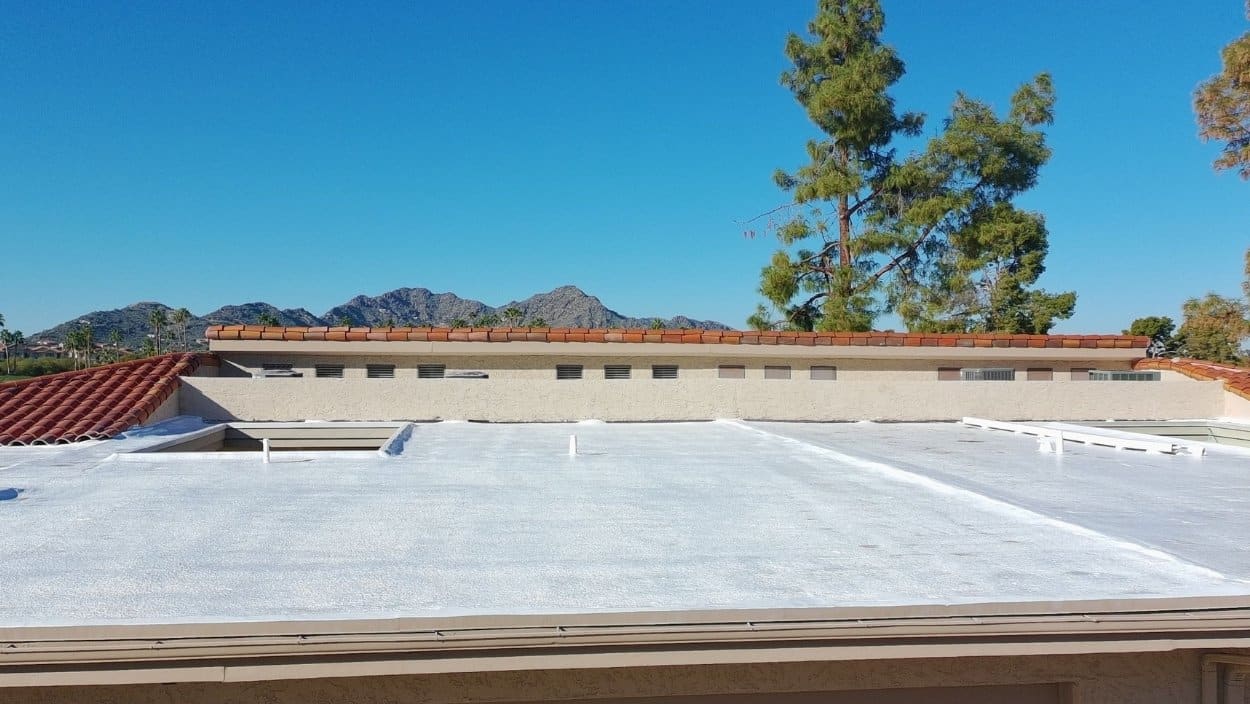
Unlike shingles or tile roofs, which have gaps, overlaps, and exposed seams, foam roofs create a continuous and monolithic surface. This seamless design is key to both waterproofing and insulation performance.
How air tightness lowers cooling bills
Energy loss through gaps or seams is a major issue for homes with aging or poorly installed roofing. Hot air infiltrates the attic or living space, forcing the A/C system to cycle longer.
Foam roofing eliminates these issues by:
- Removing thermal bridging pathways;
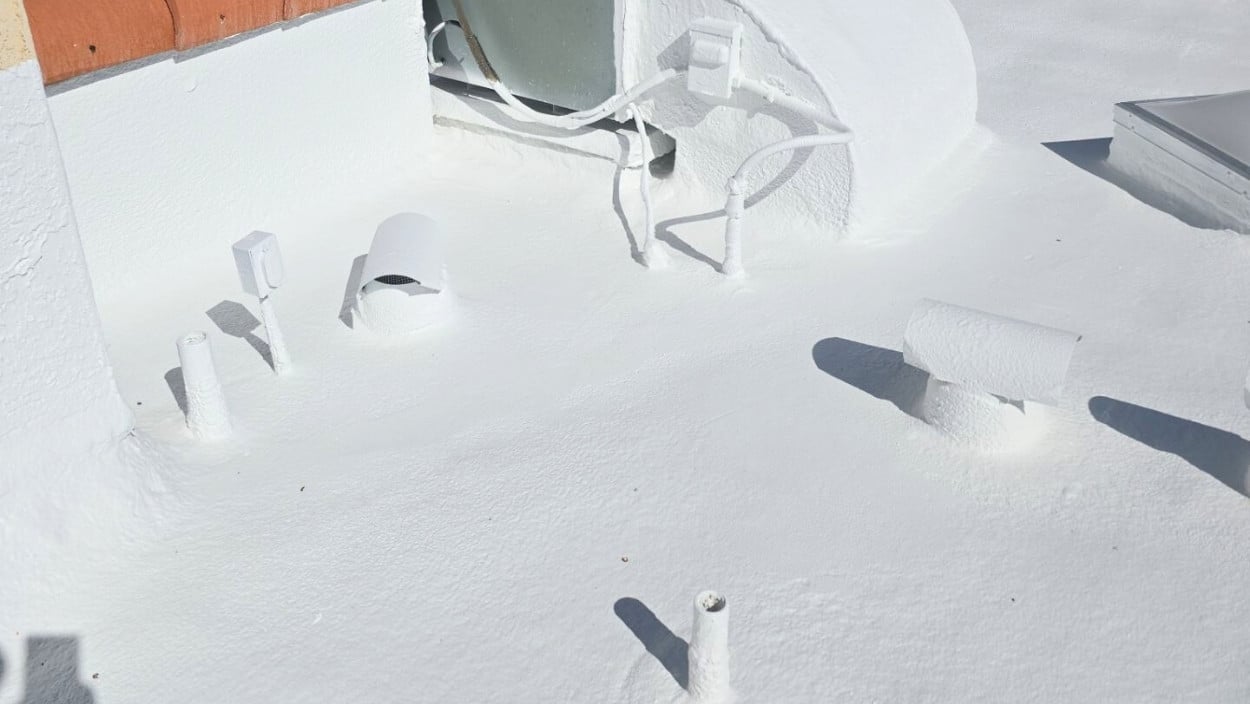
- Sealing roof transitions and penetrations;
- Blocking air gaps that leak conditioned air.
The result is a roofing system that performs like a fully sealed insulating blanket across the entire home.
3. Reflective Foam Roof Coatings Reduce Heat Absorption
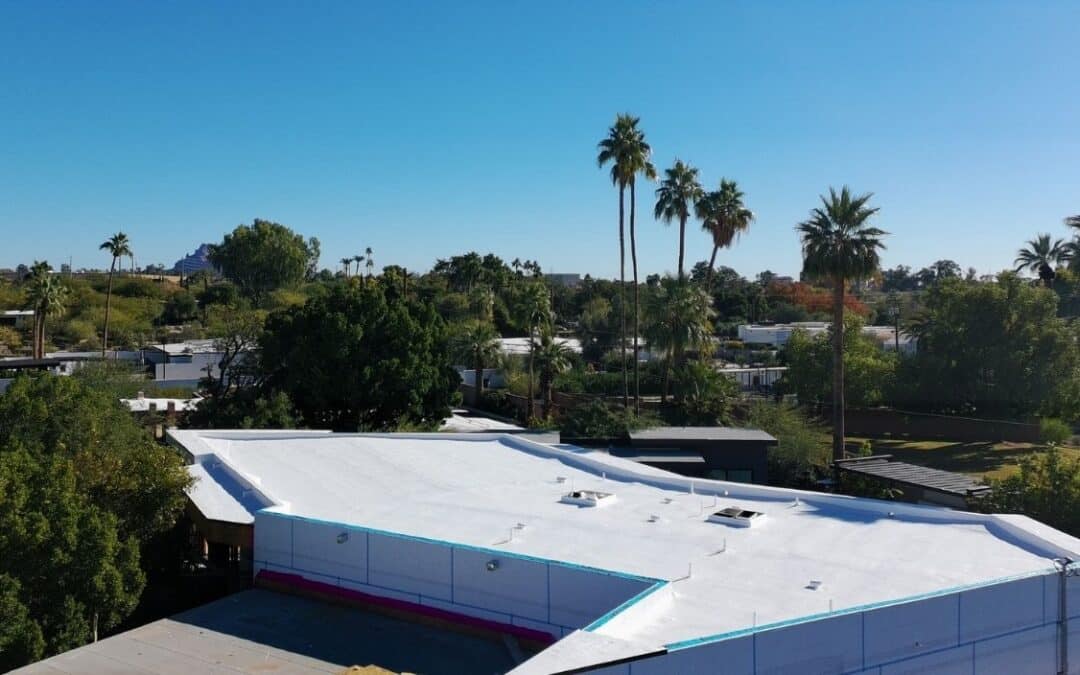
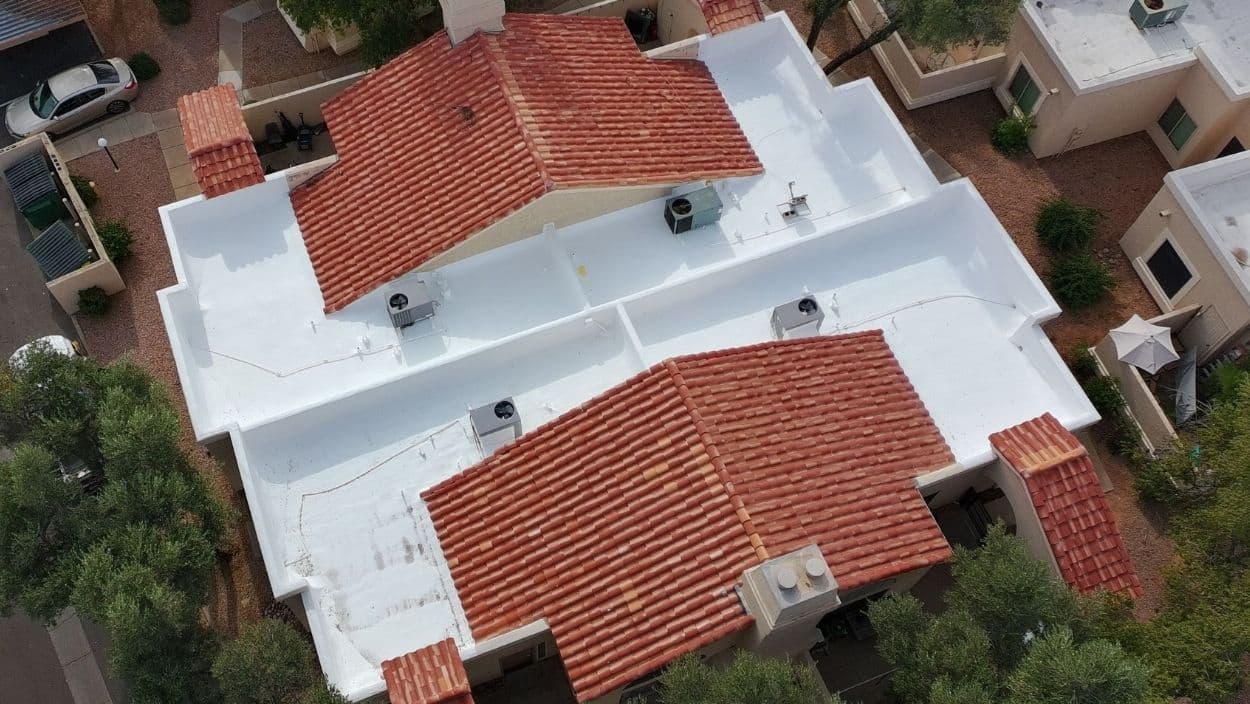
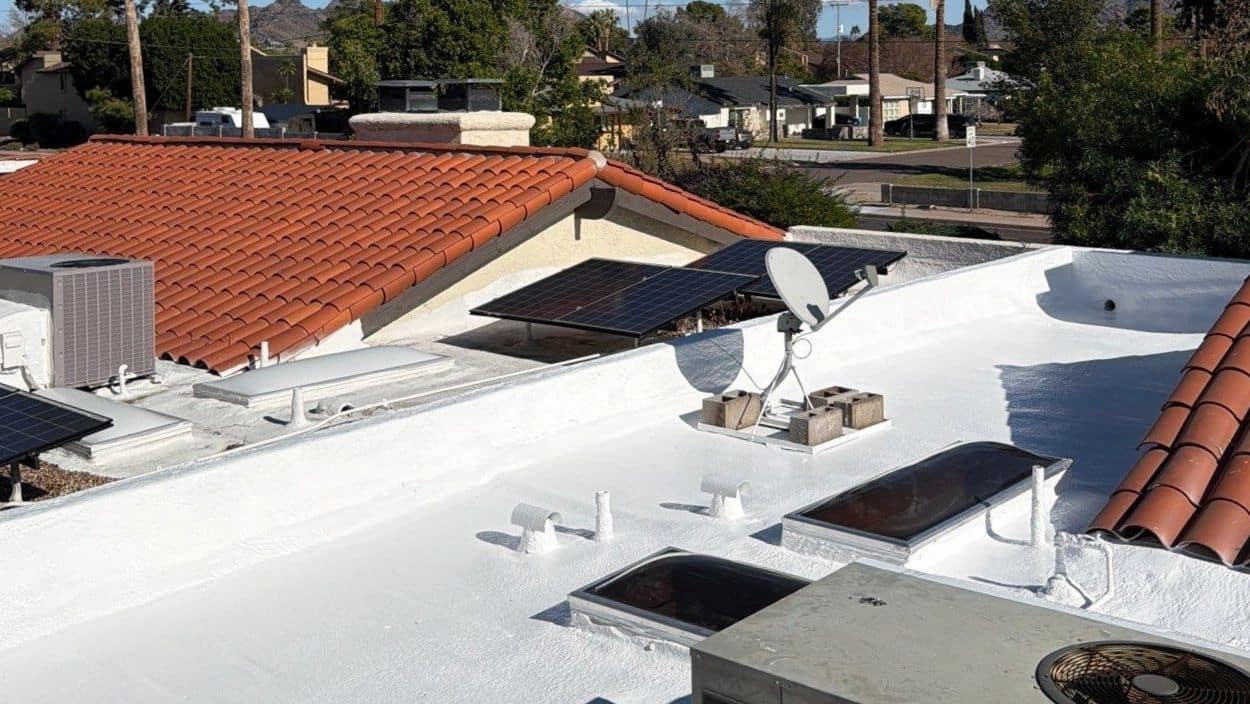
Foam roofs are finished with a UV reflective coating that protects the foam and reflects a significant portion of the sun’s rays. Many coatings used in Phoenix have solar reflectance (SR) values of 70 percent or higher.
Why reflectivity matters in Arizona
Phoenix receives intense UV exposure nearly year-round. Darker roof materials absorb this energy and radiate heat into the structure.
Foam roof coatings help by:
- Reducing surface temperature;
- Minimizing thermal radiation into the home;
- Keeping roof decks cooler throughout the day.
Lower roof temperatures directly translate to lower cooling demand.
Real-world benefit
Homes with reflective foam roof coatings often experience:
- Roof surface temperatures 30 to 60 degrees cooler than dark materials;
- Noticeable comfort improvement in rooms directly under the roof;
- Reduced heat soak during late afternoon and early evening.
The coating alone can significantly reduce energy consumption, especially during peak hours.
4. Foam Prevents Heat Transfer Better Than Other Flat Roof Options
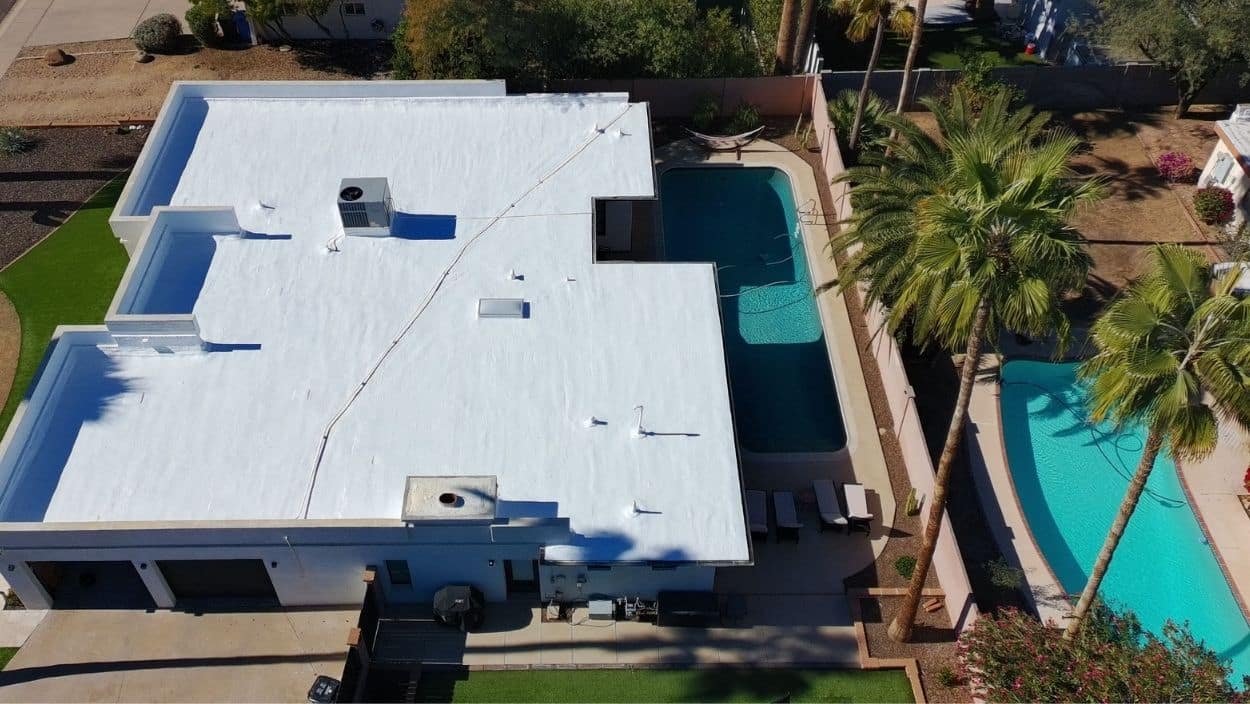
Flat and low-slope roofs are common across Phoenix, and homeowners often have limited options that perform well in extreme heat. Traditional modified bitumen, rolled roofing, and built-up roofing absorb large amounts of heat and provide minimal insulation.
Foam performs better because it combines insulation and waterproofing
Many roofing systems require separate insulation layers. Foam roofing integrates insulation directly into the roof surface, creating a more effective thermal barrier.
Foam roofs:
- Stop conductive heat transfer;
- Reduce radiant and convective heat transfer;
- Prevent thermal bridging;
- Improve overall building envelope performance.
In energy modeling studies, foam roofs consistently outperform membrane-based roofing systems by wide margins.
5. Foam Roofs Reduce AC Run Time and Improve Efficiency
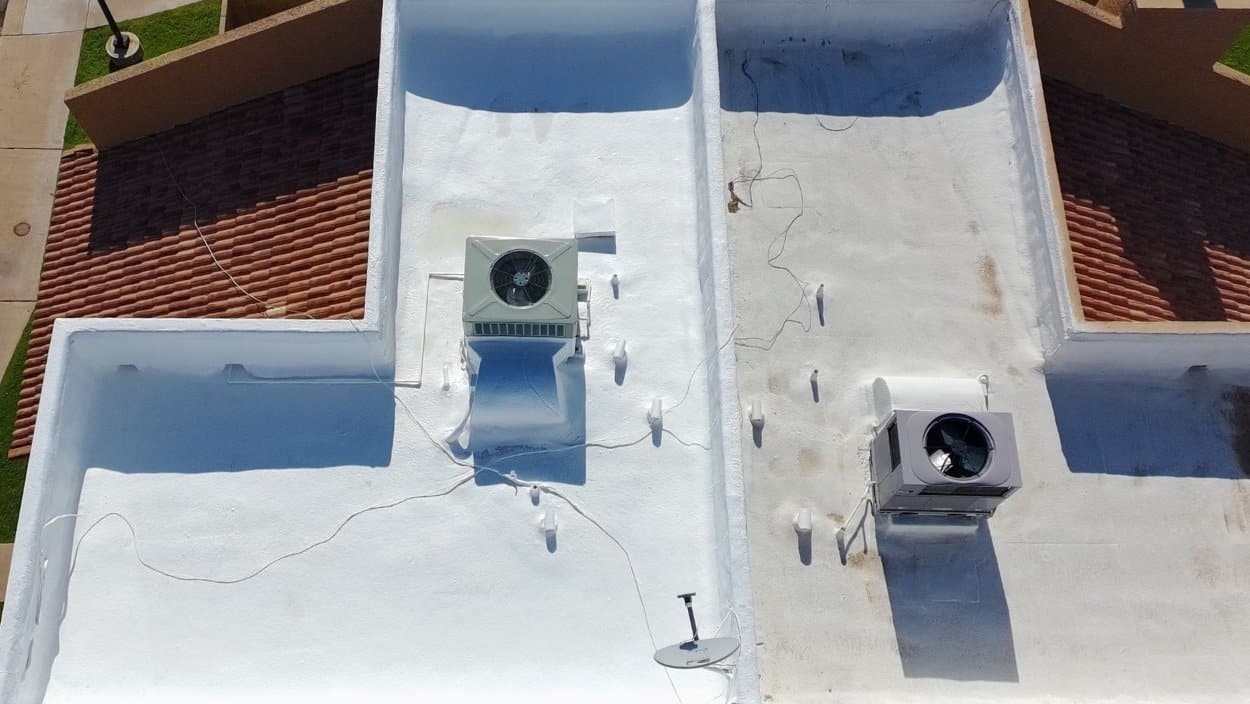
Because foam roofs significantly decrease heat entering the home, air conditioners do not need to work as hard to maintain comfortable indoor temperatures.
Benefits for homeowners include:
- Shorter AC run times;
- Fewer cycles per hour;
- Slower temperature rise indoors;
- Less strain on compressors and blowers;
- Lower electricity bills throughout summer.
In many Phoenix case studies, homes with foam roofs demonstrated a 10 to 25 percent reduction in AC run time during peak summer months. You can also learn more about it in our foam roof benefits blog.
Long-term AC improvements
Reduced runtime also increases the lifespan of HVAC equipment by reducing wear and tear. Many homeowners see additional savings through reduced maintenance and fewer premature AC replacements.
6. Foam Roofs Minimize Heat Gain During Evening Hours
One of the biggest challenges in Phoenix is that homes continue absorbing heat well into the evening. Traditional roofing materials store heat during the day and release it slowly after sunset. This creates higher indoor temperatures even when the sun is down.
Foam roofing resolves this issue by:
- Reducing daytime heat absorption;
- Preventing heat storage in the roof deck;
- Allowing the home to cool down more quickly at night.
This means air conditioners can cycle off earlier, and homeowners enjoy cooler sleeping environments with less reliance on continuous AC operation.
7. Foam Roofing Offers Energy Savings That Compound Over Time
Foam roofs do more than reduce cooling bills in the short term. They deliver long-term, compounding energy savings that continue for decades when properly maintained.
Why the savings multiply
- The foam is renewable and can be recoated instead of replaced;
- Reflective coatings preserve energy performance year after year;
- Insulation efficiency remains stable;
- Repairs and maintenance extend roof longevity.
Homeowners with foam roofing often achieve thousands of dollars in combined savings over a 20 to 30-year roof lifespan.
Lower Your A/C Bills in 2026 by Installing Foam Roofing
Foam roofing is one of the most powerful tools Phoenix homeowners can use to reduce cooling costs and improve indoor comfort. Its high insulation value, seamless installation, reflective coatings, and superior thermal performance all work together to lower energy bills year after year.
Whether you are building a new home or replacing an aging roof, a foam roofing system offers outstanding long term value and immediate savings in Arizona’s extreme climate.
Ready to cut cooling costs and upgrade your home’s roof? The foam roofing specialists at RENCO Roofing are here to help you get started.