Foam roofing is popular in arid regions like Tempe and Scottsdale, AZ and throughout the American Southwest. That’s because the combo of extreme heat, intense UV radiation, and occasional heavy rains defines our environment, and the sort of roofing materials that are traditionally used often struggle with thermal expansion and cracking.
Why Does Foam Roofing Work in Central Arizona?
In Tempe or Scottsdale, the performance of the SPF roof is exceptional because it expands into a seamless, lightweight, highly insulating, waterproof roof and uses UV reflective coatings to protect against ultraviolet rays. It also offers excellent flexibility during extreme temperature changes. It can be maintained long term with periodic inspections and recoating rather than being completely replaced at the end of its service life.
Foam Roofing in Tempe and Scottsdale, AZ: How and Why It Works
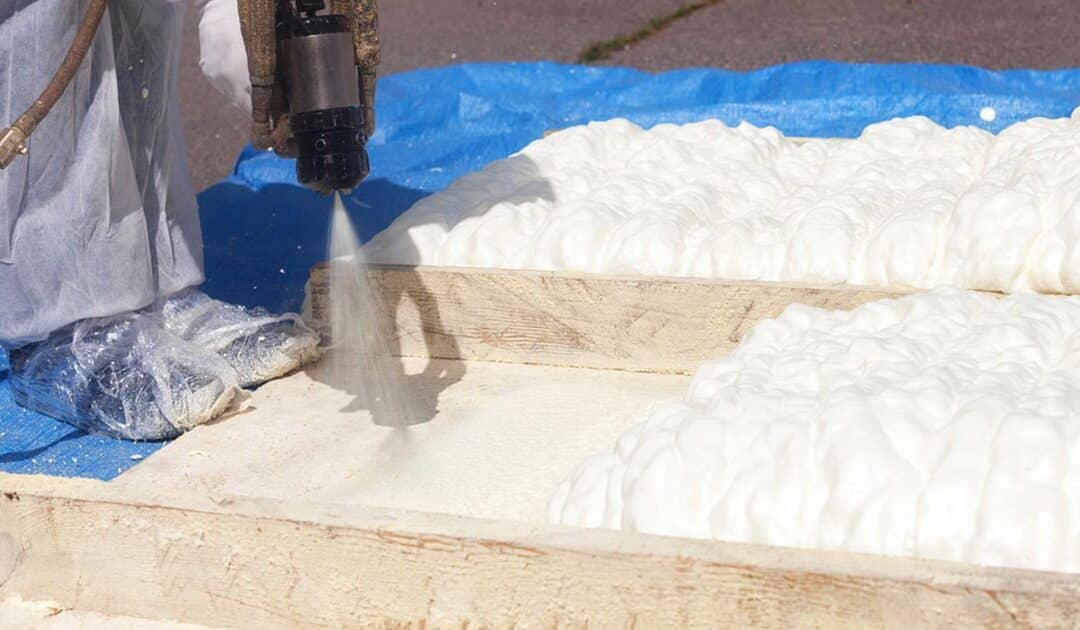
SPF roofing is applied as a liquid and expands into a rigid foam that’s topped with protective coatings. It gives you a flawless, solid insulating barrier that’s perfect for our climate. Here’s why it’s so useful:
Thermal Insulation
With R-values ranging from about 3.8 to 7 per inch, SPF creates an effective barrier against scorching outdoor temperatures that can easily exceed 100°F for months on end. A high insulation value prevents thermal bridging and seals air leaks. That makes it easier to maintain a consistent indoor temperature and reduces the load on your air conditioning system.
Then, when we apply a reflective coating over the foam, such as silicone or acrylic, it resists UV rays even better and minimizes heat absorption. This not only lowers indoor heat gain but also contributes to mitigating the urban heat island effect.
Durability in Extreme Heat
Our climate subjects roofs to relentless sun exposure and incredible, sustained heat. Asphalt shingles degrade rapidly through thermal cycling in this area. Thermal cycling is what happens when materials expand in the heat during the day and then quickly contract in the cold at night. Foam roofing excels here because it’s flexible; the material expands and contracts with temperature fluctuations.
With a compressive strength of 50-60 pounds per square inch, closed-cell SPF can stand up to the intense UV radiation prevalent in our high-altitude desert, and our protective coatings with stabilizers and reflective pigments further shield the foam to prevent discoloration, fading, and structural weakening.
Waterproofing
We’re known for low rainfall, yet the monsoon seasons can bring sudden, intense storms with flash flooding. Foam roofing’s seamless application means you have a monolithic membrane that is inherently waterproof. This is particularly beneficial during wind-driven rains that can blow off asphalt shingles or drive rain under them.
And because you have a closed-cell structure with foam, then even if part of it is punctured, water does not spread or saturate the material.
Lightweight
Foam roofing is remarkably lightweight, which means you’re putting the minimal possible stress on the building’s structure. Since our desert homes are often built on expansive soil that can sometimes shift, this means you don’t need as much support and have less risk of settlement.
Maintenance and Longevity
Maintenance is straightforward and cost-effective. You should get semi-annual inspections in spring and fall, plus checks after storms, but mostly all you’ll need to do is the occasional re-coating rather than full replacement, which only costs about 25-50% of initial installation.
If you’re interested in all the benefits of a foam roof, reach out to us now at RENCO Roofing in Tempe and Scottsdale, AZ.