Ryan Huotari, President of Renco Roofing
Last Updated: July 2026
The Quick Answer
Waiting to replace your roof is not always a mistake. If the roof is still stable, the issue is isolated, and an inspection shows there is useful life left, waiting may be reasonable.
But waiting becomes expensive when damage is already happening and you do not know it.
One of the biggest risks with an aging or leaking roof is that water can damage plywood, roof decking, framing, insulation, and drywall before you ever see a stain on the ceiling. A leak can sometimes exist for months before enough material breaks down for water to show up inside the home.
By the time you see the stain, the cost may no longer be limited to the roof.
In Phoenix, heat, UV exposure, monsoon storms, aging underlayment, worn foam coatings, clogged scuppers, and drainage problems can turn a manageable roof issue into water intrusion, damaged decking, wet insulation, interior repairs, and emergency scheduling pressure.
The goal is not to replace your roof before you need to. The goal is to know whether waiting is a smart plan or an expensive gamble.
Why Phoenix Homeowners Wait to Replace a Roof
Most homeowners do not want to replace a roof early.
That is understandable. Roof replacement is a major investment, and if your roof is not actively leaking, waiting can feel like the responsible choice. Many homeowners hope they can get through one more monsoon season, make one more repair, or wait until the timing feels better financially.
Sometimes that is the right decision.
If one area is damaged but the rest of the roof is in good condition, a repair may make more sense than replacement. If a foam roof needs maintenance but the foam underneath is still sound, recoating may be the right next step. If a shingle roof has one isolated problem, a targeted repair may be enough.
The issue is not waiting by itself.
The issue is waiting without knowing what condition the roof is actually in.
There is a big difference between delaying replacement after a clear inspection and delaying replacement because you do not want to find out what is happening. One is a plan. The other is a guess.
For more on this decision, see our guide to Roof repair vs. replacement in Phoenix.
When It Comes to Leaks, What You Can’t See Will Actually Cost More
A roof leak does not always announce itself right away.
Homeowners often assume they will know when the roof is leaking because they will see water dripping or a stain on the ceiling. Sometimes that happens. But many roof leaks start quietly.
Water may enter through a weak point in the roof and move through the attic, roof assembly, insulation, or framing before it reaches the living space. Before a stain ever appears, water may already be affecting roof decking, plywood, insulation, drywall, interior paint, or wood around the leak area.
That is one of the biggest hidden costs of waiting.
A small leak can continue for a long time before the homeowner sees anything inside. By the time a stain appears, the leak may not be new. It may simply be the first time the damage became visible.
A small ceiling stain can also be misleading. The stain tells you where water finally showed up, not necessarily where it entered the roof. Water can travel from another area before appearing inside the home.
That does not mean every ceiling stain requires roof replacement. It means the stain should be investigated before assuming it is minor.
A roofing contractor should determine whether the issue is isolated, whether the roof deck has been affected, whether water is traveling from another area, and whether the surrounding roof system is still sound.
Why Phoenix Roofs Can Get Worse Quickly
Phoenix is hard on roofs.
The sun, heat, UV exposure, thermal movement, dust, and monsoon storms all work against roofing materials. Some of the most important parts of the roof are also the parts homeowners cannot easily see.
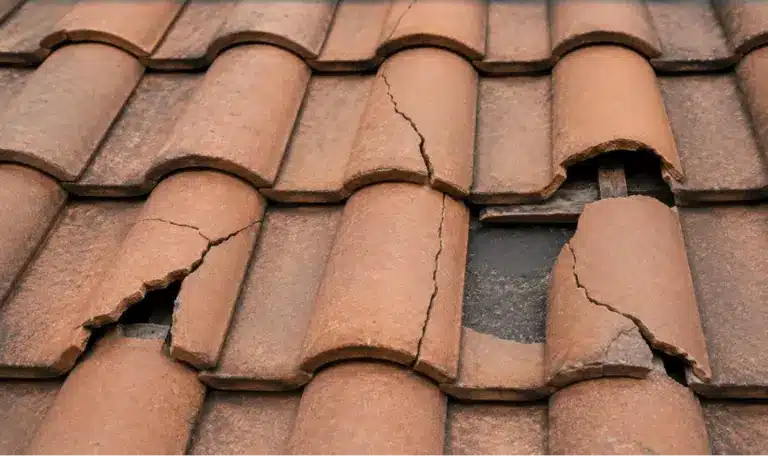
On tile roofs, homeowners often look at the tile and assume the roof is fine because the tiles still look good from the street. But the tile is not the main waterproofing layer. The underlayment beneath the tile is what protects the home from water.
Over time, Phoenix heat can dry out and weaken underlayment. A tile roof can look fine from the ground while the waterproofing layer beneath it is aging. A monsoon storm may be the first time the homeowner realizes there is a problem.
Foam roofs have a similar issue. The protective coating is what shields the foam from the sun. If the coating becomes thin, cracked, worn, or damaged, the foam underneath can begin to break down. What could have been a maintenance recoat may become a more expensive repair or restoration if it is ignored too long.
Flat roofs also depend heavily on drainage. Ponding water, clogged scuppers, debris buildup, worn coating, and cracked details around penetrations can all become bigger problems during storm season.
Phoenix does not always give roofs a slow, gentle decline. A roof may look acceptable for a while, then show problems quickly when heat, age, and storms finally expose the weak points.
Waiting Can Reduce Your Options
Waiting can also affect the way the decision gets made.
If you plan ahead, you have more control. You can schedule an inspection, compare contractors, review materials, understand warranties, ask questions, and choose a timeline that works for your home and budget.
If you wait until water is already inside, the decision feels different.
Now you may be dealing with ceiling stains, damp drywall, wet insulation, musty smells, or active dripping. You may need help quickly, and many other homeowners may be calling roofing companies after the same storm.
After major rain events in Phoenix, roofing contractors get busy. Inspection slots fill up. Repair schedules get tighter. Emergency calls become harder to handle quickly.
That can leave homeowners with fewer options, less time to compare proposals, and more pressure to approve work quickly.
This is one of the real costs of waiting. It is not only that the roof may cost more later. It is that the roof may fail before you are ready to make a good decision.
When Waiting May Still Be Reasonable
Waiting may still be reasonable when the roof has been inspected and the issue appears limited.
For example, if a tile is cracked from impact but the surrounding underlayment is in good condition, a repair may be enough. If a foam roof’s coating still has useful life left, monitoring and routine maintenance may be appropriate. If a small leak is traced to one flashing detail and the rest of the roof is performing well, replacement may not be necessary.
A trustworthy roofing company should not tell you to replace a roof that still has usable life left.
The important part is having enough information to know the difference between a roof that can wait and a roof that is already warning you.
Waiting becomes more concerning when there are recurring leaks, multiple problem areas, ceiling stains, aging underlayment, worn foam coating, exposed foam, ponding water, soft decking, or previous repairs that keep failing.
One warning sign does not automatically mean the roof needs replacement. Several warning signs together usually deserve a serious inspection.
How to Know Whether Waiting Is Still Safe
If you are deciding whether to replace your roof now or wait, start with an inspection.
A useful inspection should help you understand the current condition of the roof, whether the issue is isolated or widespread, whether repair is realistic, whether there are signs of hidden damage, and what risks come with waiting.
The contractor should be able to explain what they found in plain language. If replacement is recommended, they should explain why. If repair is still realistic, they should explain what the repair can and cannot solve.
The inspection should also help identify whether the source is actually the roof. In Phoenix, a ceiling stain after rain usually makes the roof a logical place to start. But if a stain appears when it has not rained, the issue could involve plumbing, an air conditioning unit, or another source. The goal is not to guess. The goal is to find the source before more damage develops.
A good roof decision does not always mean replacing the roof immediately. It means you understand the condition of the roof, how much useful life may be left, what risks come with waiting, and what signs would mean the timeline has changed.
Bottom Line
Waiting to replace your roof is not always wrong.
If the roof is stable, the issue is isolated, and an inspection shows there is useful life left, waiting may be a reasonable plan.
But waiting becomes expensive when the roof is already failing or when water is getting into places you cannot see.
In Phoenix, heat and monsoon storms can turn a small roofing issue into water intrusion, damaged decking, wet insulation, drywall repairs, mold concerns, emergency scheduling pressure, and fewer options.
The most expensive roof decision is often not replacing too early. It is waiting too long without knowing what condition the roof is actually in.
What to Do Next
If you are wondering whether to replace your roof now or wait, start with an inspection.
At Renco Roofing, our goal is to help you understand the condition of your roof, how much useful life may be left, whether there are signs of hidden damage, what risks come with waiting, and whether repair or replacement makes the most sense.
You do not need to panic, and you do not need to guess. A clear inspection gives you a plan, so you can make the roof decision on your terms instead of during the next storm.