Wylon Simonson, Foam Roofing Technical Consultant
Last Updated: July 2026
The Quick Answer
Most foam roofs in Phoenix need to be recoated based on the coating system and the condition of the roof, not just the age of the roof.
As a general rule, a one-coat system is often tied to a 5-year warranty, while a two-coat system is often tied to a 10-year warranty. That does not mean every foam roof automatically lasts exactly five or ten years. Sun exposure, coating thickness, drainage, roof traffic, maintenance history, and the condition of the existing foam all affect timing.
The most important thing to understand is that the foam itself is not meant to sit exposed to the Arizona sun. The coating protects the foam. When the coating wears down, cracks, peels, or becomes too thin, the foam underneath can begin to deteriorate.
That is why regular inspections matter. Even if your foam roof is not due for recoating yet, having it checked about once a year can help catch thin coating, punctures, roof traffic damage, debris, or drainage problems before they become larger repairs.
What Is Foam Roof Recoating?
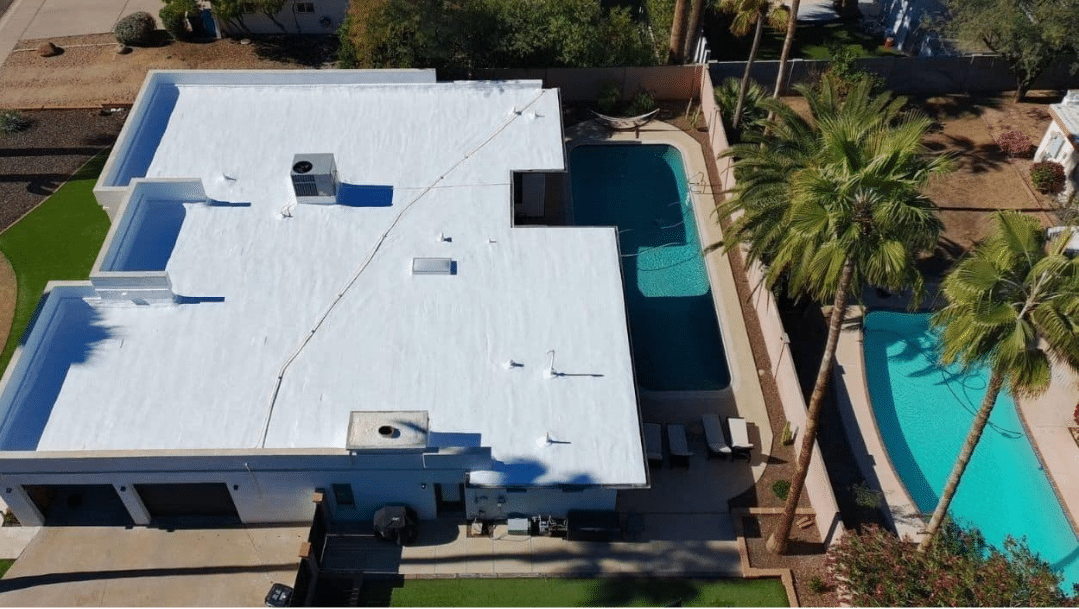
A foam roof, also called an SPF roof or spray polyurethane foam roof, is usually installed on flat or low-slope roof areas. The foam is sprayed as a liquid, expands into a solid layer, and creates a seamless surface across the roof.
But the foam is not the finished weather surface by itself.
After the foam is installed, it receives a protective coating. That coating helps shield the foam from UV exposure, weather, and surface wear. On many Phoenix homes, the coating also provides a reflective surface that can help reduce heat absorption compared with darker roof surfaces.
Recoating means applying a new protective coating over an existing foam roof after the roof has been cleaned, inspected, repaired, and prepared.
A recoat is not the same as a full foam roof replacement. If the foam is still in good condition, recoating may extend the life of the existing roof system without removing and replacing the entire roof.
Why Foam Roofs Need Recoating in Phoenix
Phoenix is hard on roof surfaces.
A foam roof is exposed to long hours of intense sunlight, high temperatures, dust, monsoon storms, and occasional foot traffic from AC service, satellite work, solar work, or other trades.
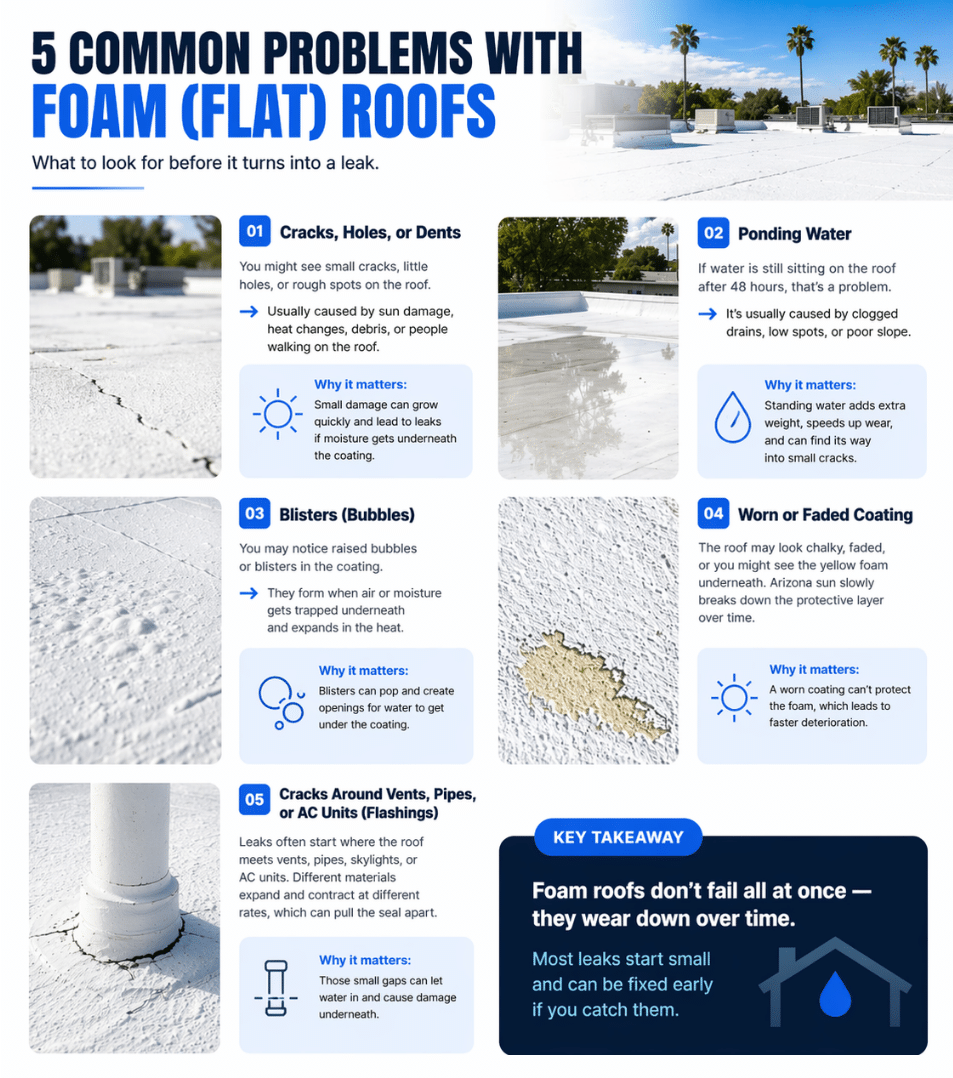
Over time, the protective coating on a foam roof can wear down. It may lose thickness, become chalky, crack, peel, blister, or separate in certain areas. Once the coating is no longer protecting the foam properly, the foam can begin to yellow, powder, break down, or absorb moisture.
That is why recoating is part of owning a foam roof.
A foam roof can be a strong flat-roof system for Phoenix homes, but it should not be treated as maintenance-free. The coating is the sacrificial layer. It protects the foam so the entire roof system can continue performing.
One of the biggest problems with foam roofs in Phoenix is simple: homeowners forget to maintain them. By the time a leak appears, the roof may already have had coating wear, cracks, punctures, ponding water, or exposed foam for a while.
Maintenance is usually easier and less expensive than waiting until the roof needs restoration or replacement.
One-Coat vs. Two-Coat Foam Roof Systems
One reason recoating timelines vary is that not all coating systems are the same.
A one-coat system is commonly associated with a shorter warranty period, often around 5 years. A two-coat system is commonly associated with a longer warranty period, often around 10 years.
The exact timing depends on the coating product, coating thickness, roof condition, maintenance history, and how the roof is exposed to sun, water, and traffic.
There is also usually a price difference between a one-coat and two-coat system. A second coat typically costs less than the first coat because much of the prep work has already been done. The roof has already been cleaned, inspected, repaired, and prepared, so the added cost is mainly tied to the additional coating material, labor, and application.
That does not mean a two-coat system is cheap. It means the second coat is usually not priced the same way as starting the whole project from scratch.
On many foam roofs, the two coats are different colors. This makes future maintenance easier to evaluate. When the lower color starts showing through the top coat, it is a visible sign that the protective coating is wearing down and the roof should be inspected for recoating.
If your roof was installed with contrasting coating colors and you can see the base coat showing through, the top coat may no longer be providing the protection it should.
How Often Should a Foam Roof Be Inspected — and What Should You Look For?
A foam roof should be inspected regularly, not only when it starts leaking.
As a practical rule, many Phoenix homeowners should have a foam roof checked about once a year and after major storms. Small issues are usually easier and less expensive to correct before the coating fails across large areas.
During an inspection, the contractor should look for:
- Thin, faded, chalky, or worn coating
- Base coat showing through the top coat
- Exposed foam
- Yellowing, powdery, burnt, or deteriorated foam
- Cracks, peeling, flaking, or coating separation
- Punctures, dents, or roof traffic damage
- Blisters, bubbles, or soft spots
- Ponding water
- Debris buildup
- Drainage issues around scuppers, drains, or low spots
- Problem areas around AC units, parapet walls, pipes, vents, and other penetrations
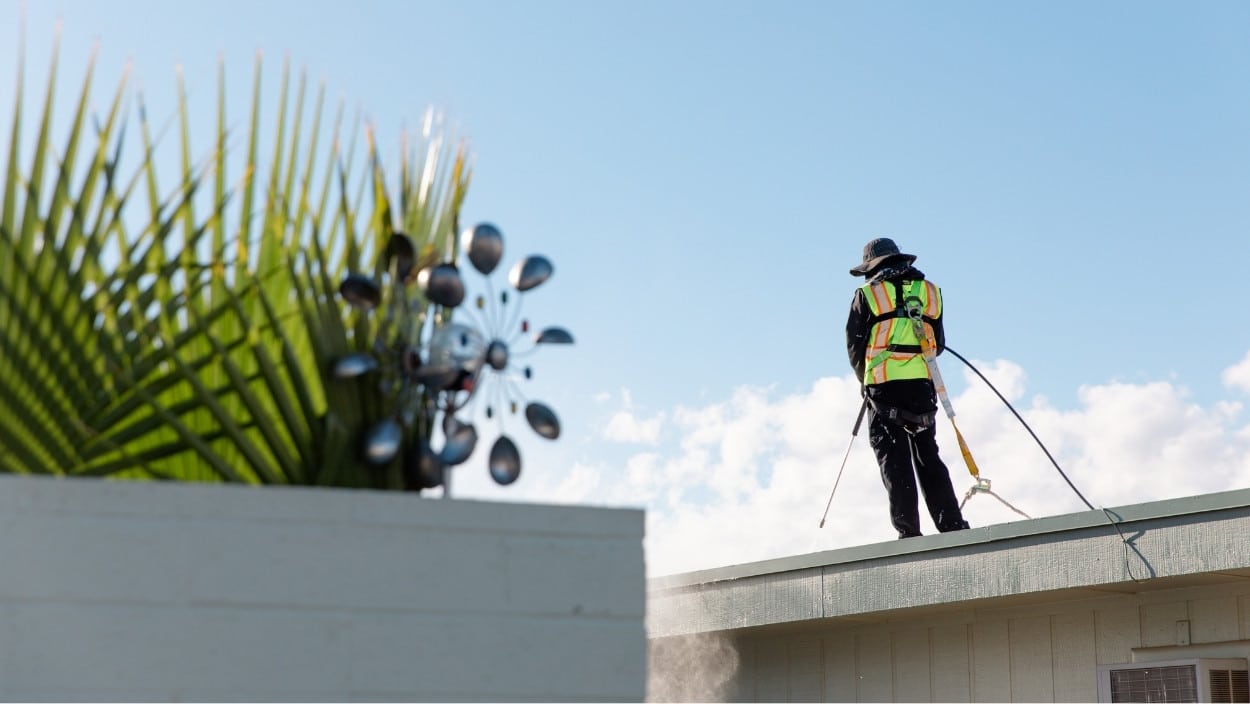
Foam roofs often have roof traffic. AC service, satellite work, solar work, or other trades may require people to walk across the roof. That traffic can damage the coating, especially if tools are dropped, equipment is dragged, or workers repeatedly cross the same area.
Walk pads can help protect roof surfaces in high-traffic areas, especially around rooftop equipment. On residential foam roofs, they may not be needed as often because traffic is usually limited. On commercial roofs, they are more common because HVAC technicians, maintenance crews, and other trades may access the roof more frequently.
For a residential foam roof, the bigger issue is usually making sure roof traffic is limited, careful, and checked during maintenance inspections.
For Phoenix homeowners, inspections are especially useful before or after monsoon season because wind, debris, and heavy rain can expose weak spots on a flat roof.
A foam roof does not need to be leaking before it needs attention. In many cases, the visible surface starts showing warning signs first.
What Affects Foam Roof Recoat Timing?
Two foam roofs installed in the same year may not need recoating at the same time.
Several factors affect how quickly the coating wears down.
Coating type and thickness: A thicker or higher-quality coating system may last longer than a thin or lower-grade application. The proposal should explain what coating is being used, how many coats are being applied, and what warranty or maintenance expectations come with it.
Sun exposure: Phoenix sun is one of the biggest reasons coatings wear down. Roof areas with direct exposure may age faster than shaded areas. South- and west-facing exposures, parapet walls, and open flat areas may experience more heat and UV stress.
Drainage: If water sits on the roof, the coating may wear faster in those areas. Ponding water can also make small surface defects more serious because the roof is under repeated moisture stress.
Foot traffic: Areas around AC units are especially important in Phoenix because many homes have rooftop equipment. If technicians regularly walk across the same areas, the coating may wear faster.
Previous installation quality: If the foam was installed properly, the coating was applied correctly, drainage was addressed, and repairs were handled early, the roof may be easier to maintain.
Maintenance history: If the roof has thin coating, poor prep, unresolved ponding, exposed foam, or multiple previous patch repairs, the recoat decision becomes more complicated.
The calendar matters, but roof condition matters more.
Recoat, Restore, or Replace: What Is the Difference?
Not every foam roof needs the same solution.
A recoat may be enough when the existing foam is still in good condition and the main issue is that the protective coating is aging. In that case, the roof may need cleaning, minor repairs, surface preparation, and a new coating system. This is the ideal scenario because it maintains the roof before the foam itself is seriously damaged.
A restoration may be needed when the roof has more than surface-level coating wear. Restoration pricing becomes more likely when there is too much damage for a simple recoat. That may include exposed foam, widespread cracks, soft spots, blisters, damaged areas, wet foam, recurring leaks, or other conditions that need to be repaired before coating can be applied properly.
In other words, restoration is not just “more coating.” It means the roof needs corrective work before the new coating system can perform.
A replacement may be needed when the foam roof has too much damage or wear to be a good candidate for recoating or restoration. If the foam is badly deteriorated, holding moisture, breaking down, too damaged, or no longer providing a reliable base, adding coating over the top may only hide the problem temporarily.
Warning signs that the roof may need more than a simple recoat include burnt or deteriorated foam, heavy blistering, large cracks, soft areas, exposed foam, recurring leaks, cracking at seams, or widespread wear.
The goal is not to recoat at all costs. The goal is to determine whether the existing foam roof is still worth maintaining.
This is why waiting too long can become expensive. Once the foam underneath the coating is compromised, the project may move from maintenance to restoration or replacement.
What Happens During a Foam Roof Recoat?
A proper foam roof recoat starts with preparation.
First, the roof is inspected to determine whether recoating is appropriate. The contractor should look for exposed foam, cracks, punctures, ponding water, blisters, soft spots, previous repairs, and problem areas around drains, scuppers, AC units, parapet walls, and penetrations.
Next, the roof is cleaned and prepared. Coating should not be applied over dirt, dust, loose material, moisture, damaged foam, or areas that need repair.
After cleaning, repairs are made as needed. This may include patching damaged foam, sealing cracks, reinforcing vulnerable areas, correcting details, or addressing coating failures.
Then the new coating is applied according to the system being installed.
Weather matters. Contractors generally avoid recoating when rain is expected or when the roof cannot dry properly. Heat is usually less of a limitation in Phoenix than moisture, rain, humidity, or conditions that prevent the coating from drying and curing properly.
A foam roof recoat should not be treated as simply rolling on white coating. Prep, cleaning, repairs, and correct application are what determine whether the new coating can perform properly.
How Much Does Foam Roof Recoating Cost in Phoenix?
Foam roof recoating is usually less expensive than a full foam roof replacement, but the cost depends on the condition of the roof and the coating system being installed.
In Phoenix, foam roof recoating often starts around $1.50 to $3.50+ per square foot of roof area when the existing foam is in good condition and the project is primarily cleaning, prep, minor repairs, and new coating.
For example, if a home has about 2,000 square feet of foam roof area, a basic recoat might fall somewhere around $3,000 to $7,000+, depending on the coating system, warranty level, roof condition, access, prep work, and repairs needed.
That example is only a rough illustration. The actual price depends on the measured roof area and what the roof needs before coating can be applied.
It is also important to understand that roof area is not always the same as home square footage. A 2,000-square-foot home may not have 2,000 square feet of foam roofing. Some homes only have foam over a patio, garage, addition, or flat section. Others may have a full flat roof.
The price may increase if the roof needs more preparation or repair before coating. Common cost factors include roof size, coating type, coating thickness, number of coats, warranty level, amount of prep work, repairs needed before coating, ponding water or drainage issues, roof access, number of AC units or penetrations, and whether damaged foam needs to be repaired.
There is also usually a price difference between a one-coat and two-coat system. A second coat typically costs less than the first coat because much of the prep work has already been done. The roof has already been cleaned, inspected, repaired, and prepared, so the added cost is mainly tied to the additional coating material, labor, and application.
If the existing foam is in good condition, a recoat may be a maintenance project. If the roof has exposed foam, wet areas, blisters, soft spots, or widespread deterioration, the cost can increase because the contractor must fix those problems before coating.
If the foam is too damaged or worn, a simple recoat may not be the right solution. The roof may need restoration or replacement instead.
[For more detail, see our guide on How Much Does a Foam Roof Cost in Phoenix?]
Why a Cheaper Foam Recoat Quote May Not Be the Same Scope
Foam roof recoat quotes can vary significantly.
One contractor may include cleaning, repairs, reinforcement, proper coating thickness, and detailed work around penetrations. Another may provide a lower price that includes less preparation, thinner coating, limited repairs, or vague material descriptions.
A lower price is not automatically wrong, but the homeowner should understand what is included.
Before accepting a foam recoat quote, ask:
- What coating product is being used?
- How many coats are included?
- How thick will the coating be applied?
- What preparation is included?
- Are exposed foam or damaged areas included in the repair scope?
- How will ponding water or drainage problems be addressed?
- Are cracks, blisters, soft spots, or penetrations included?
- What warranty is included?
- What maintenance is expected after the recoat?
If the estimate does not answer those questions, you may not be comparing the same job.
[For more on this, see our article on What Should Be Included in a Roofing Estimate?].
Can You Wait to Recoat a Foam Roof?
Sometimes waiting a short time may be reasonable if the roof is still in good condition and the contractor says the coating has useful life left.
But waiting too long can be costly.
The purpose of recoating is to protect the foam before it deteriorates. If the coating wears through and the foam is exposed to UV, weather, and moisture, the roof may need repairs or restoration before it can be recoated. In more severe cases, replacement may be the better option.
The decision should be based on roof condition, not the calendar alone.
If the roof is showing exposed foam, widespread cracking, peeling, ponding water, soft spots, recurring leaks, or the base coat showing through across large areas, waiting may increase the eventual cost.
Bottom Line
Most foam roofs in Phoenix need to be recoated based on the coating system and roof condition.
A one-coat system is often tied to a 5-year warranty. A two-coat system is often tied to a 10-year warranty. But the actual timing depends on coating thickness, sun exposure, drainage, maintenance, roof traffic, and whether the foam itself is still in good condition.
The coating is what protects the foam. When the coating wears down, the foam underneath becomes vulnerable.
The best time to recoat is before the foam is exposed or damaged. Regular inspections help you catch coating wear early, plan maintenance, and avoid turning a manageable recoat into a larger restoration or replacement project.
What to Do Next
If you have a foam roof and you are not sure when it was last recoated, start with an inspection.
At Renco Roofing, we evaluate the coating condition, exposed foam, cracks, ponding water, drainage, penetrations, AC areas, roof traffic areas, and previous repairs. Then we explain whether the roof needs a simple recoat, more extensive restoration, or replacement.
A foam roof can be a strong flat-roof option for Phoenix homes, but it needs the protective coating maintained. The sooner you understand the condition of that coating, the better decision you can make for your home.