Jeff Nickerson, Technical Roofing Consultant
Last Updated: August 2026
The Quick Answer
Tile roof leaks in Phoenix are usually not caused by the tile itself.
They are more often caused by aging underlayment, cracked or slipped tiles, poor flashing details, dead valleys, clogged or undersized drainage areas, roof-to-wall transitions, previous repairs, pigeon or rodent damage, or poor workmanship.
A tile roof can look fine from the ground and still leak because the tile is not the main waterproofing layer. The tile protects the roof from sun, debris, and direct weather exposure, but the underlayment and flashing system underneath are what keep water out of the home.
In Phoenix, tile roof leaks are also affected by heat, UV exposure, monsoon storms, wind-driven rain, roof design, and which side of the home takes the most weather.
The first step is not just finding the leak. The first step is confirming whether the water is actually coming from the roof.
Stop! Is It Really a Roof Leak?
When a homeowner sees water inside the house, it is natural to assume the roof is leaking.
But that is not always true.
Water can come from the roof, but it can also come from windows, stucco, wall transitions, condensation lines, plumbing, HVAC equipment, or another part of the home’s exterior system.
That exterior system is often called the building envelope. The building envelope includes the roof, walls, windows, stucco or siding, vapor barriers, insulation, flashings, and other details that help keep weather outside the home.
The roof is only one part of that system.
That is why a good inspection should start by looking at where the water is showing up inside the home. The location of the stain, drip, or damaged drywall can help determine whether the source is likely the roof or another part of the home.
This matters because the wrong diagnosis can lead to the wrong repair.
A homeowner may pay for a roof repair, partial replacement, or even a full roof replacement and still have the same leak during the next heavy rain if the real source was a window, stucco detail, wall flashing, condensation line, or another building envelope issue.
Before anyone recommends a roof repair or replacement, the first question should be: where is the water actually entering the home?

The Tile Is Not the Waterproofing Layer
One of the biggest misunderstandings about tile roofs is that the tile itself keeps all the water out. It does not.
Concrete and clay tiles are durable, and they protect the roof system from sun, debris, and direct weather exposure. They also give the home its appearance.
But tile roofs are designed with the understanding that some water can get beneath the tile.
That is why the underlayment matters so much.
The underlayment is the hidden waterproofing layer beneath the tile. If water gets under the tile, the underlayment is supposed to direct that water down and off the roof before it reaches the roof deck or interior of the home.
So when a tile roof leaks, the problem is often not simply “bad tile.” The real issue may be failing underlayment, poor flashing, a bad valley detail, a weak roof-to-wall transition, or water being allowed to run in the wrong place underneath the tile.
A tile roof leak is usually a system problem, not just a tile problem.
[Related article: The Best Underlayments for Tile Roofs]
Aging Underlayment Is One of the Most Common Causes

In Phoenix, aging underlayment is one of the most common reasons tile roofs leak.
The tile may last for decades, but the underlayment usually does not last as long as the tile itself. Over time, heat and UV exposure can dry out the underlayment, make it brittle, weaken it, or cause it to crack and lose its ability to shed water properly.
This is why a tile roof can still look good from the street while the hidden waterproofing layer is failing underneath.
Homeowners often say, “But my tiles look fine.”
That may be true. The tiles may be fine. But if the underlayment underneath has aged out, the roof can still leak.
This is especially common on older Phoenix tile roofs. A roof can go years without obvious symptoms, then suddenly start leaking during a monsoon because the underlayment has reached the point where it can no longer handle water intrusion.
Broken, Cracked, or Slipped Tiles Can Let More Water In
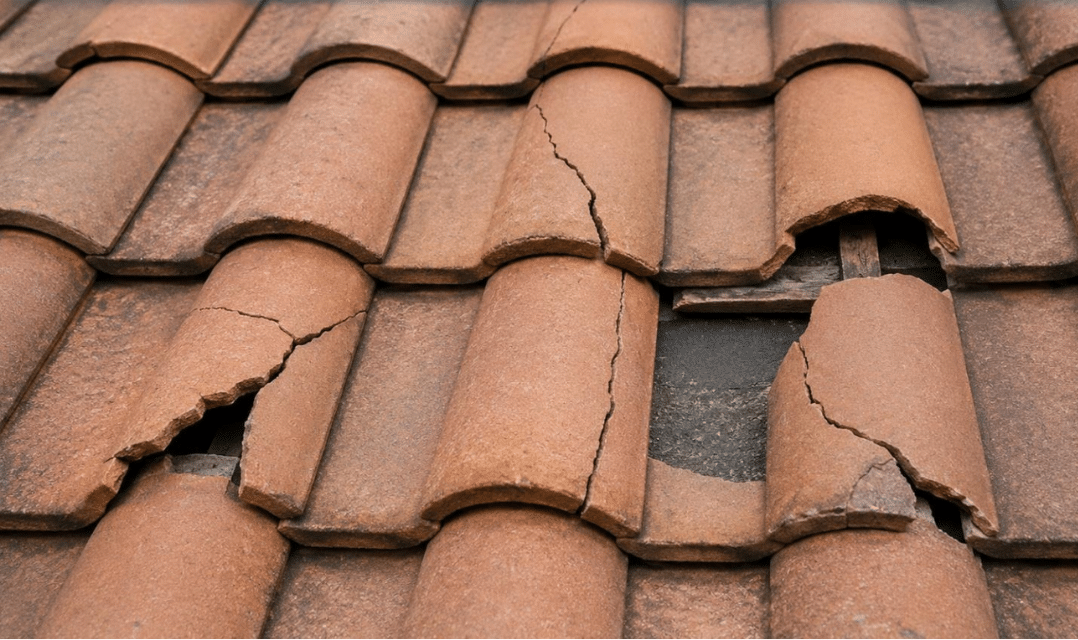
Although the tile is not the main waterproofing layer, broken or displaced tiles still matter.
Cracked, broken, slipped, or missing tiles can expose the roof system to more water and more direct sunlight. They can also allow debris to collect underneath the tile or create openings where wind-driven rain can enter more easily.
A single broken tile does not always mean the roof will leak immediately. If the underlayment underneath is still in good condition, it may continue protecting the home.
But broken or slipped tiles increase the stress on the underlayment.
This matters in Phoenix because the underlayment may already be dealing with years of heat and UV exposure. Once more water starts getting beneath the tile, a weak underlayment layer may fail faster.
Broken tiles should be repaired, but the bigger question is always: what condition is the underlayment in beneath them?
Flashing and Roof-to-Wall Details Are Common Leak Points

Flashing is used where the roof meets another surface or object.
That may include walls, chimneys, skylights, vents, pipes, roof edges, parapets, and other transitions. On tile roofs, flashing details are especially important because water has to be directed around these areas properly.
If flashing is missing, damaged, poorly installed, reused incorrectly, or not tied into the rest of the roof system properly, water can find a path into the home.
Roof-to-wall transitions are a common problem area in Phoenix homes. These areas may involve stucco, wall flashing, counterflashing, channel metal, or other details that must work together.
If the roof is blamed automatically, the real problem can be missed.
Sometimes the leak is not from the roof field at all. It may be coming through a wall detail, window, stucco crack, or flashing issue where the roof and wall meet.
That is why a proper leak inspection should look at the full area around the leak, not just the tile directly above the ceiling stain.
Tile Roofs Need to Manage Water Under the Tile

A tile roof is not just tile and underlayment.
It also has a hidden water-management system.
That system may include underlayment, valley metals, channel metals, flashings, J-pans, wall details, and drainage paths that move water off the roof.
When these details are designed and installed correctly, water has a clear path down and off the roof. When they are undersized, blocked, poorly installed, or worn out, water can run where it should not run.
This is one reason tile roof leaks can be frustrating. The tile may look fine, but water may be moving incorrectly underneath it.
In some cases, water is not being kept on top of the tile system as much as it should be. In other cases, water gets under the tile but is not being controlled properly once it gets there.
The result is the same: water eventually finds a weak point.
Dead Valleys and Small Drainage Details Can Cause Big Problems

Some tile roof leaks happen because too much water is being forced through a small or poorly designed drainage area.
Dead valleys are a common example.
A dead valley is an area where roof slopes, walls, or roof sections come together in a way that makes water slow down, collect, or change direction before it can drain off the roof.
In a heavy Phoenix monsoon, that can become a major problem.
If a small J-pan, channel metal, or valley detail is expected to carry a large amount of water and turn it sharply, the water may overflow, back up, or run under the tile.
Over time, that can damage the underlayment and lead to leaks.
This is why valleys and drainage details matter so much on tile roofs. It is not enough for the roof to look good. The roof has to move water properly.
A leak in a dead valley may not be fixed by replacing a few tiles. The real issue may be that the drainage detail is too small, poorly designed, or not able to handle the amount of water reaching that area.
Complicated Roof Designs Create More Leak Opportunities
A roof can look attractive and still be harder to keep watertight.
Homes with many hips, gables, reverse gables, wall transitions, dead valleys, and small roof sections create more places where water has to be controlled carefully.
Every transition is another detail that has to be installed correctly.
One of our roofing consultants puts it simply: “Cute causes problems.”
That does not mean attractive roof designs are bad. It means complicated roof designs require better water management.
A simple roof plane sheds water more predictably. A cut-up roof has more places where water can slow down, turn, collect, or move under the tile.
The more complex the roof design, the more important the hidden waterproofing details become: underlayment, valley metal, channel metal, flashings, J-pans, wall transitions, and drainage paths.
This is why two tile roofs of the same age can perform very differently.
A simple roof design may go much longer with fewer leak issues. A more complex roof may have more vulnerable areas even if the materials are similar.
South and Southwest Roof Areas Often Leak First
In Phoenix, the side of the roof matters.
South-facing roof areas often get more year-round sun exposure. That extra heat and UV exposure can cause underlayment and roof details to age faster than areas that receive less direct sun.
Storm direction matters too. In our field experience, many Phoenix-area storm leaks show up on the south and southwest sides of homes because those areas often take the hardest hit from wind-driven rain. That combination matters.
Heat and UV exposure can weaken underlayment and roof details over time. Then, when a monsoon storm pushes rain sideways into the same areas, water is more likely to find a weak point.
If a home has repeated leaks on the south or southwest side, the inspection should look closely at underlayment condition, wall transitions, valleys, flashings, and any place where wind-driven rain may be getting pushed under the tile.
This is one of the reasons Phoenix tile roof leaks are not always evenly distributed across the roof.
One side of the roof may simply take more abuse than the others.
Monsoon Storms Can Reveal Problems That Were Already There
A monsoon storm does not always create a brand-new roof problem. Sometimes it reveals a weakness that was already there.
During light rain, an older underlayment system or weak flashing detail may not leak. But during a heavy storm, water can be pushed sideways, forced into transitions, or concentrated in valleys and drainage areas.
That is when hidden roof problems show up.
This is especially true with tile roofs because water can travel under the tile before entering the home. A ceiling stain may appear in one area, but the actual entry point may be higher up the roof or several feet away.
Monsoon leaks should be taken seriously, but the diagnosis should not stop at “it rained hard.” The question is: what detail failed when the roof was under stress?
Poor Workmanship Can Cause Newer Tile Roofs to Leak
A tile roof does not have to be old to leak.
If a tile roof is less than 10 years old and already having problems, the cause may be poor workmanship, the wrong underlayment, bad flashing details, undersized drainage metals, or damage from roof traffic or pests.
Poor workmanship can include many things: sloppy flashing, poor valley details, incorrect lap patterns, reused components that should have been replaced, weak roof-to-wall transitions, poorly sealed penetrations, or underlayment that was not appropriate for the roof system.
One common issue is vague underlayment language.
A proposal may say “synthetic underlayment,” but not all synthetic underlayments are designed for use under tile in Phoenix. Some products are made for shingle roofs and may not be appropriate beneath a tile system.
This matters because a homeowner may think they are getting a modern underlayment, but the actual product may not be the right fit for the application.
If a newer tile roof leaks, the inspection should not automatically assume the material failed. The real issue may be how the roof was installed.
Previous Repairs Can Create New Problems
Tile roof repairs need to be done carefully.
A poor repair may stop water temporarily but create another problem later. This can happen when repairs are made with the wrong material, when flashing is not corrected, when tiles are reset improperly, or when the repair only addresses the visible leak without solving the water path.
Some repairs also disturb surrounding tile or underlayment. If the repair area is not tied back into the roof system correctly, water may find another path in.
This is why repeated repairs in the same area are a warning sign.
If a tile roof keeps leaking near the same valley, wall, penetration, or transition, the problem may not be one cracked tile. It may be the underlying detail.
A proper repair should address the cause of the leak, not just cover the symptom.
Pigeons Can Contribute to Tile Roof Problems
Pigeons are not just a nuisance.
On some tile roofs, especially taller homes surrounded by lower homes, pigeons may roost under tiles, near roof transitions, or in protected roof areas.
Their waste can build up and hold moisture. When pigeon waste gets wet, it can become corrosive and damage certain roofing materials over time.
This can be especially problematic when waste and debris collect under tile or in drainage areas.
Pigeon activity can also block water paths, trap moisture, and make it harder for the roof system to dry out properly.
If a roof has a history of pigeon problems and is leaking, the inspection should look for buildup, blocked drainage areas, underlayment damage, and roof sections where birds may have been nesting or roosting.
Pigeon damage is not the most common cause of every tile roof leak, but when it is present, it can make other roof problems worse.
Signs a Tile Roof Leak May Be Bigger Than One Broken Tile
Some tile roof leaks are isolated. Others are signs of a larger roof system problem.
A leak may be bigger than one broken tile if the roof is older, the underlayment is brittle, leaks are appearing in multiple areas, water stains return after repairs, the leak is near a dead valley or wall transition, or the roof has repeated problems during monsoon storms.
Other warning signs include widespread cracked tiles, slipped tiles, visible debris buildup, previous patchwork, roof sections with heavy pigeon activity, or leaks on the south or southwest sides of the home where sun and wind-driven rain are more severe.
The age of the roof also matters.
If the roof is near the end of its underlayment life, a repair may stop one leak but not address the broader issue. In that case, the homeowner may need to discuss partial underlayment replacement, a larger repair, or a full lift-and-reset.
The right answer depends on what the inspection shows.
Can a Tile Roof Leak Be Repaired?
Yes, many tile roof leaks can be repaired.
A repair may make sense if the leak is isolated, the surrounding underlayment is still in good condition, the flashing detail can be corrected, and the rest of the roof is performing well.
For example, a broken tile, small flashing issue, isolated penetration problem, or localized valley detail may be repairable.
But repair is not always enough.
If the underlayment is failing across a large area, if the roof has multiple leaks, if dead valleys or wall details are repeatedly failing, or if the roof has widespread age-related deterioration, a small repair may only buy time.
The important question is not just, “Can this leak be stopped?”
The better question is, “Why did it leak, and is the rest of the roof still protecting the home?”
Repair, Partial Replacement, or Full Lift-and-Reset?
Tile roof leak solutions can range from small repairs to full underlayment replacement.
A small repair may involve replacing broken tiles, correcting a flashing issue, repairing a penetration, or addressing a localized area of damaged underlayment.
A partial underlayment replacement may make sense when one roof section is failing but other sections still have useful life.
A full lift-and-reset may be recommended when the tile is still usable but the underlayment beneath it has reached the end of its life. In that process, the tile is removed, the old underlayment is replaced, and the tile is reinstalled if it is still in usable condition.
Replacement decisions should be based on the roof condition, not fear.
The goal is to fix the actual problem at the right level.
What Happens If You Ignore a Tile Roof Leak?
Ignoring a tile roof leak can make the problem more expensive.
Water can damage underlayment, roof decking, insulation, drywall, framing, paint, and interior finishes. A small stain may be the first visible symptom, but the damage may have started earlier in the attic or roof system.
In Phoenix, leaks can be intermittent. A roof may leak during a strong monsoon but seem fine during lighter rain. That can make homeowners delay repairs.
The problem is that the roof may still be vulnerable.
If water has found a weak point once, it may find it again during the next storm. Over time, that can turn a localized issue into a larger repair.
Bottom Line
Tile roof leaks in Phoenix are usually caused by the system beneath and around the tile, not just the tile itself.
Common causes include aging underlayment, cracked or slipped tiles, poor flashing, dead valleys, undersized drainage details, roof-to-wall transitions, previous repairs, pigeon activity, poor workmanship, and roof designs that make water harder to control.
Phoenix adds its own challenges: intense sun, south and southwest exposure, monsoon storms, wind-driven rain, and complicated roof designs that create more leak opportunities.
The most important step is proper diagnosis.
Before assuming the roof needs a small repair or a full replacement, find out whether the water is truly coming from the roof, where it is entering, why it is entering, and whether the problem is isolated or part of a larger roof system issue.
What to Do Next
If your tile roof is leaking, start with a detailed inspection.
At Renco Roofing, we look at the interior leak location, roof condition, underlayment, tile, valleys, flashings, wall transitions, drainage details, dead valleys, pigeon activity, and surrounding building envelope details.
The goal is to identify the real source of the leak so you do not pay for the wrong solution.