Jeff Nickerson, Commercial Roofing Consultant
Last Updated: July 2026
The Quick Answer
For most tile roofs in Phoenix, the best underlayment is usually a self-adhered modified bitumen product, sometimes called peel-and-stick underlayment.
It bonds to the roof deck, provides strong long-term protection, and can help seal around many nail or fastener penetrations. That matters because the tile is not the main waterproofing layer. The underlayment beneath the tile is what protects your home from water.
A strong second option is modified asphalt underlayment, such as a 40-pound mineral-surfaced product, especially when installed in two layers.
Basic 15-pound or 30-pound felt may cost less upfront, but it usually does not hold up as well in Phoenix heat. We are also cautious with some synthetic underlayments because thin materials can age quickly under tile.
If you are already paying to remove and reset tile, the underlayment you choose matters.
Why Tile Roof Underlayment Matters So Much
Tile roofs are common across Phoenix, Scottsdale, Chandler, Peoria, and many other Arizona communities.
Homeowners often like tile because it looks durable, fits the Southwest style, and can last a long time. But tile can also create a false sense of security.
The tile is the visible layer. It helps shed water, shields parts of the roof system from direct sun, and gives the home its finished appearance.
But a tile roof is not waterproof because of the tile alone.
Wind-driven rain can get beneath tile. Water can move through gaps, around flashings, into valleys, and around roof penetrations.
The underlayment is the layer installed over the roof deck and beneath the tile. When water gets past the tile, the underlayment is supposed to direct that water down and off the roof before it reaches the wood deck or enters the home.
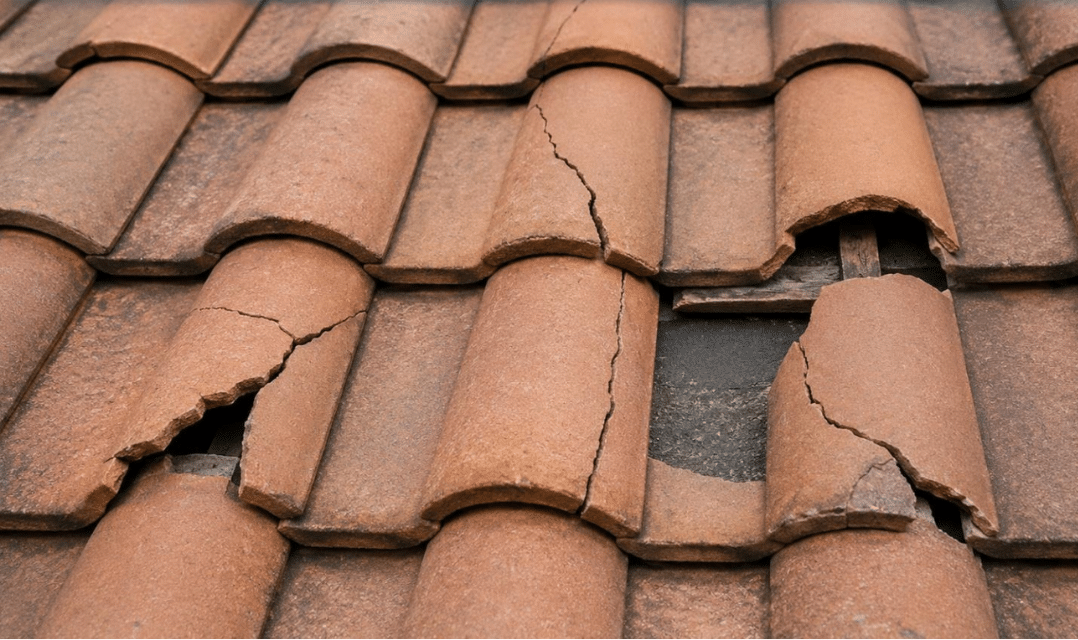
If the underlayment becomes brittle, cracked, torn, curled, or worn out, the tile above it may still look normal while the actual waterproofing layer is no longer doing its job.
That is why a tile roof can look fine from the street but still leak during a storm.
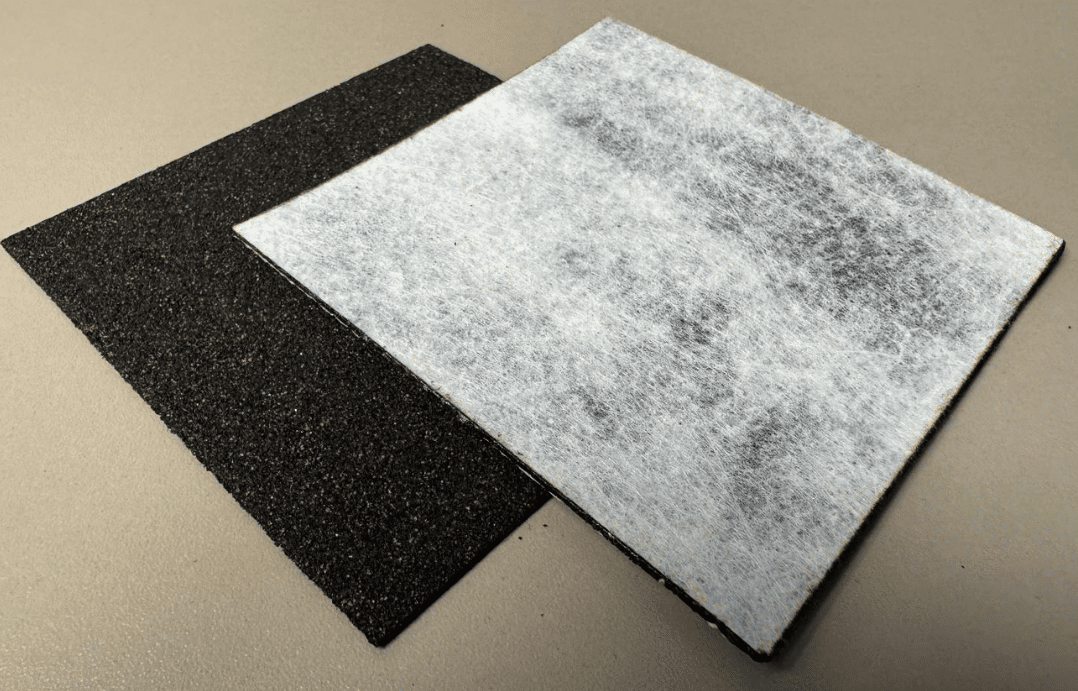
Why Phoenix Is So Hard on Tile Roof Underlayment
Phoenix is not an easy place for roofing materials.
Tile roof underlayment sits below the tile, but it still has to survive years of heat, trapped air, thermal movement, and moisture cycles.
During summer, roof surfaces can get extremely hot. The space beneath tile can also hold intense heat for long periods. Over time, that heat can dry out and weaken lower-grade underlayment materials.
Phoenix roofs also expand and contract as temperatures change. That movement happens day after day, season after season.
This is where flexibility matters.
Underlayments that become brittle and hard are more likely to crack when the roof structure moves. Modified asphalt and self-adhered modified bitumen products tend to retain more flexibility over time than lower-tier products. That flexibility helps the underlayment continue doing its job as the roof ages.
Then monsoon season tests the weak points.
A light rain may not reveal a problem. But wind-driven monsoon rain can push water beneath tile and into valleys, wall transitions, pipe penetrations, flashing areas, and previous repair areas.
If the underlayment is still flexible and intact, it may handle that water. If it has already aged, cracked, or failed, water can find its way into the roof deck or the home.
The Main Types of Tile Roof Underlayment
Homeowners do not need to know every technical detail about tile roof underlayment, but it helps to understand the main categories before comparing roofing quotes.
For Phoenix tile roofs, the main options are self-adhered modified bitumen, modified asphalt underlayment, basic asphalt felt, and synthetic underlayment.
Self-adhered modified bitumen is usually the strongest option. It bonds directly to the roof deck, provides a thicker waterproofing layer, and can help seal around many nail and fastener penetrations. If a homeowner wants long-term protection and plans to stay in the home, this is often the first option worth discussing.
Modified asphalt underlayment, such as a 40-pound mineral-surfaced product, can also be a strong choice. In some Phoenix tile roof systems, especially when installed in two layers, it can provide a good balance of durability, flexibility, and cost.
Basic asphalt felt, such as 15-pound or 30-pound felt, is usually a lower-cost option. The concern is that Phoenix heat can dry it out over time, making it brittle, cracked, or less reliable as the waterproofing layer beneath the tile.
Synthetic underlayment is more complicated. Some products may look good on paper, but we are cautious with synthetic underlayments in Phoenix tile roof applications because heat beneath tile can age thin materials quickly. If a contractor recommends synthetic, ask which product is being used, what it is rated for, and why it makes sense for your roof.
The main point is simple: if you are already paying to remove and reset tile, the underlayment choice matters. The material you choose can affect how long the roof protects your home before you have to do that labor-heavy project again.
What Is the Best Underlayment for a Phoenix Tile Roof?
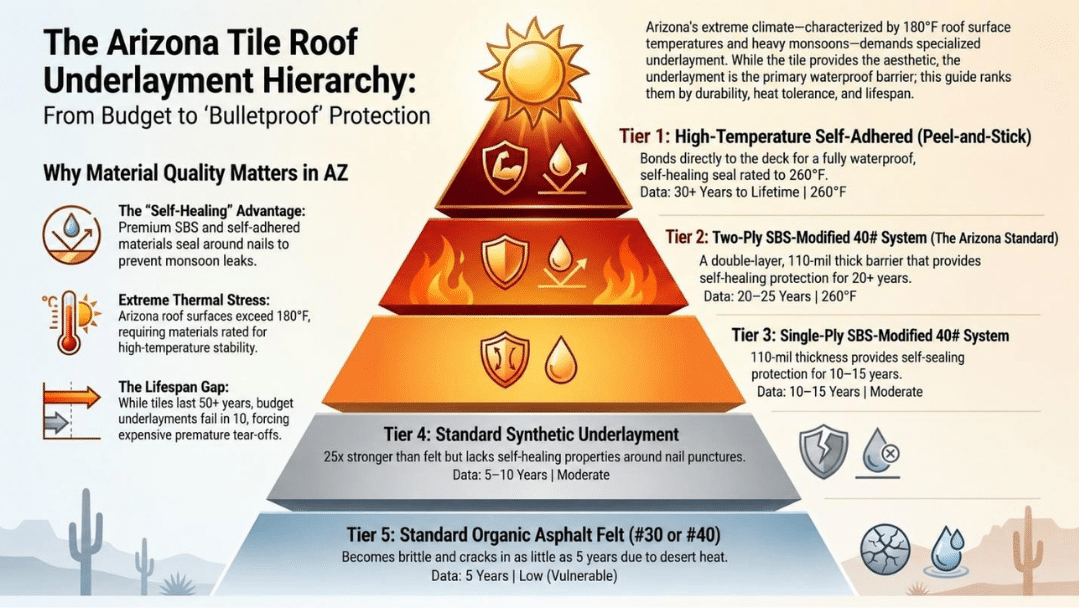
For most Phoenix tile roofs, our preferred underlayment is usually a self-adhered modified bitumen product.
That is the strongest option because it bonds to the roof deck, offers long-term durability, provides strong waterproofing protection, and can help seal around many fastener penetrations.
The next best option is often a modified asphalt underlayment, such as a 40-pound mineral-surfaced product. If installed in two layers, it can be an excellent system for many homes.
Basic 15-pound or 30-pound felt is a lower-tier option. It may reduce the initial price, but it is usually not what we would recommend for long-term performance in Phoenix.
Synthetic underlayment should be evaluated carefully. Do not assume “synthetic” automatically means better. In Phoenix tile roof conditions, that is not always true.
The best choice depends on the roof, the budget, and the homeowner’s goals. A homeowner planning to stay in the home long term may choose a stronger system than someone preparing the home for sale. But even in a shorter-term situation, the roof should still be functional, properly installed, and clearly documented.
The point is not to oversell every homeowner into the most expensive product. The point is to match the underlayment to the roof and the homeowner’s actual goal.
Why Two Layers Can Matter
Underlayment is the waterproofing layer beneath the tile. When there is only one layer, that one layer has to do all the work. If it splits, cracks, tears, or fails at a weak point, water may have a path to the roof deck.
With two layers, the roof has added protection. If the top layer develops a problem, the second layer may still help catch the water and move it off the roof.
That does not mean two layers automatically solve every problem. Valleys, penetrations, flashings, eaves, wall transitions, and edges still matter. The installation has to be done correctly.
But on a Phoenix tile roof, two layers of a good modified asphalt product can create a much stronger system than one layer of a lower-tier material.
This is also one reason two tile roof quotes can look very different. One proposal may include one layer of a lower-cost underlayment. Another may include two layers of a stronger modified asphalt product or a premium self-adhered system.
Both proposals may say “tile roof underlayment replacement,” but they are not the same roof.
Why Tile Roof Quotes Can Be Thousands of Dollars Apart
Underlayment is one of the biggest reasons tile roof quotes can vary.
One contractor may propose a basic underlayment to keep the price lower. Another may include a self-adhered modified bitumen system, two layers of modified asphalt, upgraded flashing details, additional valley protection, new battens, bird stops, drip edge, or better work around penetrations.
From the homeowner’s perspective, both proposals may look like “tile roof replacement” or “tile roof underlayment replacement.”
But they may not be the same roof system.
That is why you should not compare tile roof quotes by price alone. Ask what underlayment is included. Ask whether it is self-adhered, modified asphalt, basic felt, or synthetic. Ask whether one layer or two layers are being installed. Ask what happens around valleys, walls, scuppers, skylights, chimneys, vents, and pipe penetrations.
A cheaper quote may be legitimate if the scope, material, and warranty are comparable.
But if one quote includes a stronger underlayment system and more complete detailing, the higher price may reflect a more complete roof.
[For more help comparing proposals, see our guide on Why Some Roofing Quotes Are Cheaper Than Others.]
Installation Matters as Much as the Underlayment Itself
A better underlayment can still fail if it is installed poorly.
On a tile roof, the details matter. Valleys, penetrations, roof-to-wall transitions, eaves, ridges, vents, skylights, and previous repair areas all need careful attention. These are the places where water often concentrates or enters the roof system.
A proper tile roof underlayment project should also include an inspection of the exposed roof deck once the tile is lifted. This is one of the only times the contractor can see whether the wood beneath the roof has moisture damage, dry rot, soft spots, or other problems.
Tile handling also matters.
On many Arizona homes, older tile may be discontinued, sun-faded, or difficult to replace. During a lift-and-reset project, the crew has to remove, stack, and reinstall tile carefully. Some breakage is possible, but the contractor should have a plan for protecting the tile and replacing damaged pieces when needed.
The underlayment is critical, but it is only one part of the roof system.
Warning Signs Your Tile Roof Underlayment May Be Failing
You usually cannot see underlayment from the ground.
That is one reason tile roofs can be misleading. The tile may look fine, while the waterproofing layer underneath is already aging or failing.
The most common warning sign is a ceiling stain after rain. Other signs may include leaks during wind-driven monsoon storms, repeated repairs in the same area, musty or damp smells inside the home, cracked or slipped tiles, deteriorated underlayment visible at edges, soft decking found during repair work, or roof leaks that were patched but keep returning.
A ceiling stain does not automatically mean the entire underlayment system has failed. But it does mean water got somewhere it should not have gone.
If the home is around 10 years old and the roof is already leaking, the issue may involve a lower-tier underlayment, a one-layer system, poor detailing, installation defects, or a problem area that allowed water to bypass the tile and underlayment.
The important thing is to inspect it before assuming the roof is fine just because the tile still looks good.
For more on warning signs, see [How Do I Know If My Tile Roof Underlayment Is Failing in Phoenix?]
Questions to Ask About Tile Roof Underlayment
Before choosing a contractor for tile roof underlayment replacement, make sure you understand what roof system they are actually recommending.
Start with the underlayment itself. Ask what product they are using and why they recommend it for your roof. A proposal should be specific, not just say “new underlayment” or “quality underlayment.” Self-adhered modified bitumen, modified asphalt, basic felt, and synthetic underlayments are not the same, and they may perform very differently in Phoenix heat.
It is also worth asking whether the roof will use a one-layer or two-layer system. In some tile roof systems, two layers can provide added protection if the top layer develops a weak point.
Beyond the underlayment, ask what else is included in the project. Flashings, battens, bird stops, drip edge, damaged decking, and other components can affect both the price and the long-term performance of the roof.
Finally, ask what warranty applies and how the work will be documented. Photos can help you understand what was done beneath the tile, especially since most of the finished work will be hidden once the tile is reset.
These questions help you compare the actual roof system, not just the final price.
[For a deeper look at warranty language, see our article on Roof Warranties in Plain English.]
Final Takeaway
If you have a tile roof in Phoenix, the underlayment beneath the tile is one of the most important parts of the entire roof system.
For most Phoenix tile roofs, our preferred option is usually a self-adhered modified bitumen underlayment because it provides strong long-term protection, bonds to the roof deck, and helps seal around many fastener penetrations.
A modified asphalt underlayment, especially in a two-layer system, can also be a strong option.
Basic felt is lower-tier. Synthetic underlayment should be evaluated carefully, because “synthetic” does not automatically mean better in Phoenix tile roof conditions.
Before choosing a contractor, make sure you understand what underlayment is being used, why it was recommended, whether one or two layers are included, what areas receive extra protection, what the warranty covers, and how the work will be documented.
What to Do Next
If you are replacing a tile roof, resetting existing tile, or comparing roofing quotes, ask your contractor to explain the underlayment system in detail.
At Raving Roofs, we inspect the existing roof, look at the condition of the tile and decking, evaluate valleys and penetrations, and explain which underlayment options make sense for your home.
Then we provide a detailed proposal so you can understand what is included, why it matters, and how it affects the long-term protection of your roof.
If you are not sure whether your tile roof underlayment is failing, start with an inspection.