Scott Raisanen, Roofing Consultant
Last Updated: July 3rd, 2026
The Quick Answer
Choosing a roofing contractor in Phoenix should involve more than comparing prices or picking the person you liked most during the estimate.
Start by confirming that the contractor is properly licensed in Arizona and carries the required protections. Then pay close attention to how clearly they explain your roof, their recommendation, the proposed work, the materials, the warranty, and the alternatives available to you.
One of the biggest warning signs is vagueness. If a contractor cannot clearly explain what is happening with your roof or what they plan to do about it, you may be taking on risk you do not fully understand.
You should also be cautious if replacement is presented as the only option without a real discussion. Even when a roof is in poor condition, homeowners may have questions about repairs, temporary solutions, timing, budget limitations, or whether another approach is possible.
The right contractor should help you understand the problem, compare realistic options, and make a decision that fits your home and your situation.
Why Choosing a Roofer Feels Difficult
Most homeowners do not hire roofing contractors very often.
When you do need one, it may be because you have a leak, storm damage, an aging roof, or an expensive project you did not expect. Suddenly, you are comparing quotes for work you may not completely understand.
You may be wondering:
- Does the roof really need this much work?
- Is the cheaper quote missing something?
- Is the more expensive quote actually better?
- Will the company still be around if I need warranty service?
- Am I being pushed toward replacement when a repair might work?
Those are reasonable concerns. A roof protects the home, but it is difficult for most homeowners to judge a recommendation from the ground.
That is why the contractor’s ability to explain the problem matters so much.
Start by Verifying the Contractor
Before evaluating the proposal, verify that the contractor is properly licensed with the Arizona Registrar of Contractors and that the license is in good standing.
The easiest way to do this is to ask the contractor for their ROC license number, then look it up through the Arizona Registrar of Contractors’ online contractor search. You can search by license number or contractor name. Once you find the record, confirm that the license is current, the business name matches the company you are considering, and the license classification appears to match the type of work listed in your proposal.
Do not rely only on a logo, truck wrap, business card, website badge, or verbal statement that the contractor is licensed. Take a few minutes to verify the record yourself before signing.
This does not tell you whether that contractor is the best choice for your particular roof. But it gives you an important starting point and may provide consumer protections that would not be available when working with an unlicensed contractor.
Arizona residential contractors are subject to state licensing requirements and financial-protection processes involving bonds and the Residential Contractors’ Recovery Fund. If a serious problem occurs, a homeowner may be able to file a complaint or pursue an available recovery process through the Arizona Registrar of Contractors, depending on the facts, eligibility requirements, and filing deadlines.
Licensing should not be the only reason you choose a roofer. But hiring an unlicensed contractor can remove an important layer of protection when something goes wrong.
Along with license status, look at how long the company has been operating, its reputation, its reviews, and whether it appears capable of supporting the roof after installation.
The Biggest Red Flag: A Contractor Who Is Vague
One of our roofing experts, put this simply: if the contractor is light on detail, that should set off alarm bells.
A roofing recommendation should not sound like:
“Your roof is bad.”
“You need to replace it.”
“This is the standard system.”
“Do not worry about the details.”
“We will figure it out once we start.”
The contractor should be able to explain what type of roof you have, what condition it is in, what problem was found, what work is being recommended, and why that approach makes sense.
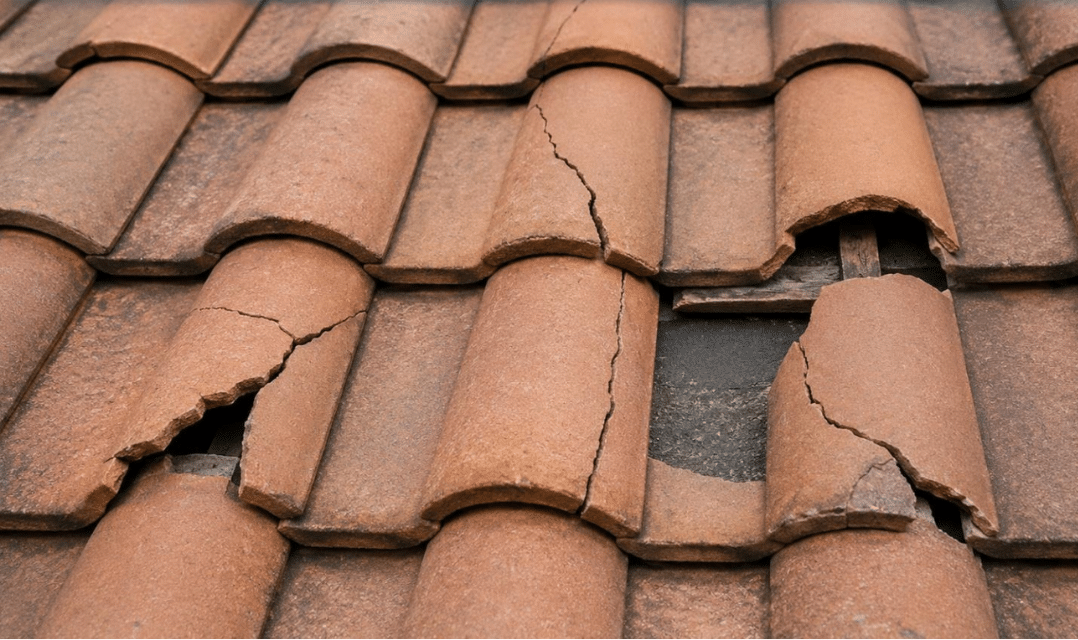
For example, if you have a tile roof, you should understand whether the concern is broken tile, failing underlayment, flashing, a valley, or something else. If you have a foam roof, you should understand whether the issue involves coating wear, cracking, blisters, ponding water, or damage beneath the surface.
A recommendation is easier to trust when it is connected to specific findings.
Photos help. Written scope helps. Straight answers help.
Vagueness does the opposite.
Be Careful When Replacement Is Presented as the Only Option
Not every roofing problem means you need a full roof replacement.
Sometimes a repair is appropriate. Sometimes one area of a roof can be addressed while the rest still has useful life left. Sometimes a homeowner has budget constraints and needs to understand what can be done now versus what should be planned for later.
There are also roofs where replacement is clearly the most responsible recommendation. If multiple areas are failing, if the waterproofing layer has reached the end of its life, or if repairs are unlikely to last, continuing to patch the roof may be poor use of the homeowner’s money.
The important point is that the contractor should be willing to explain the options and the tradeoffs.
A contractor should be able to say:
- “This can be repaired, and here is what the repair should accomplish.”
- “This repair may buy time, but it is not a long-term solution.”
- “Only this section appears to be failing, so a partial replacement may be possible.”
- “The problems are widespread enough that replacement is likely the more financially responsible option.”
- “You may not need to do everything today, but here is the risk of waiting.”
If someone insists that there is only one answer but cannot explain why, slow down and ask more questions.
Compare the Work Behind the Price
Price matters. Roofing projects are expensive, and homeowners should absolutely understand what they are paying.
But two roofing quotes are only comparable if they describe similar work.
A cheaper proposal may still be the right choice. It may come from a newer contractor with lower overhead, a smaller company, or a contractor offering more aggressive pricing. But it may also be cheaper because the scope is smaller, the materials are different, preparation is limited, property protection is reduced, or important items are excluded.
Before choosing a proposal, compare these items:
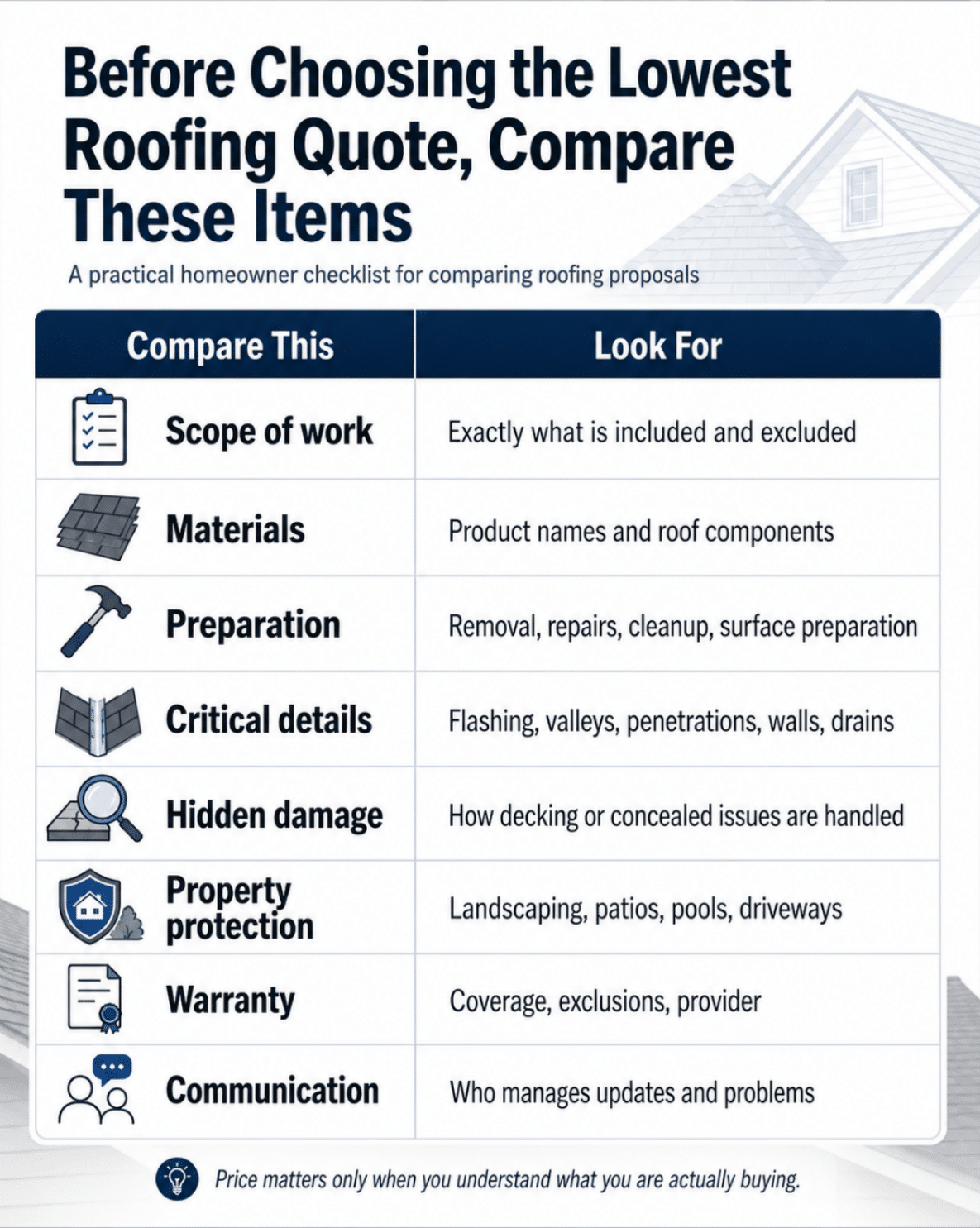
If one quote is substantially less expensive, ask the contractor to explain the difference. A lower price is not automatically suspicious, but you should understand what makes it lower.
A Warranty Is Important but They Are Drawbacks
Homeowners often look at the number of years on a warranty and assume the longer warranty is automatically better.
It is not that simple.
A workmanship warranty is provided by the contractor. That means the warranty has practical value only if the company remains in business, responds to warranty concerns, and stands behind its work.
This does not mean homeowners should automatically avoid a newer contractor. Every established roofing company was new at some point, and a newer contractor may have experienced people, strong workmanship, and competitive pricing.
But there is a tradeoff.
A contractor with a long, established history may give you more confidence that they will still be available years later if a warranty issue arises. A newer contractor may offer a better price, but you should understand that the long-term track record is not yet proven.
Ask:
- Who provides the warranty: the contractor, the manufacturer, or both?
- What exactly is covered?
- What is excluded?
- What maintenance is required?
- What happens if a problem develops later?
- How long has the company been operating under its current license and name?
The warranty document matters. The company standing behind it matters too.
[Read article Roof Warranties in Plain English]
Getting More Than One Opinion Can Be Smart
You do not have to choose the first contractor who looks at your roof.
In fact, when a project is expensive, the recommendation is unclear, or you are being told the only solution is full replacement, getting another opinion may be a smart step.
A second contractor may confirm the first recommendation. Or they may identify another option the first contractor did not discuss.
That does not mean the first roofer was automatically dishonest. Roofing systems can be evaluated differently, and contractors may approach the same problem in different ways.
What matters is whether each contractor can explain the recommendation with enough detail for you to understand the reasoning.
When multiple contractors agree on the problem and the appropriate solution, that can give you confidence. When the recommendations are very different, it gives you a reason to ask deeper questions before making a decision.
Questions to Ask Before Hiring a Roofing Contractor
You do not need to know everything about roofing to choose a contractor wisely. You need to ask questions that reveal whether the recommendation is thoughtful and complete.
| Question to Ask | What You Want to Hear |
| What exactly did you find on my roof? | Whether the recommendation is based on specific findings |
| Can you show me photos of the problem? | Whether you can see what the contractor is describing |
| Why are you recommending this option? | Whether repair, partial replacement, restoration, or replacement was considered |
| Are there any other realistic options? | Whether the contractor is willing to discuss tradeoffs |
| What exactly is included in the proposal? | Whether the scope is complete and comparable |
| What materials will be used? | Whether the roof system fits your home and Phoenix conditions |
| What is excluded or may change later? | Whether hidden costs or limitations are being addressed |
| What warranty applies, and who provides it? | Whether long-term protection is clearly explained |
| How will my property be protected? | Whether care for the home is part of the process |
| Who will communicate with me during the project? | Whether you will know who to contact if something changes |
Pay attention not only to the answer, but also to how the contractor responds.
Someone who welcomes questions and explains the work specifically is giving you more to evaluate than someone who dismisses concerns or relies on pressure.
When a Lower-Priced Contractor May Be the Right Choice
The lowest quote is not automatically the wrong quote.
A lower-priced contractor may be a reasonable choice when the scope is clear, the proposed materials are appropriate, the installation details are explained, the warranty is understood, and the company answers your questions directly.
A newer contractor may also be worth considering if the people involved have strong roofing experience and the proposal is detailed. The homeowner simply needs to understand the tradeoff: a more aggressive price may come with less evidence of long-term company history.
Choose a lower quote because you understand the value and accept the tradeoffs, not because it is the only number you compared.
Final Takeaway: Choose the Contractor Who Makes the Decision Clearer
Choosing a roofing contractor in Phoenix is not just about finding the lowest price or the most confident salesperson.
It is about finding someone who can clearly explain what is happening with your roof, what options are available, what each option is intended to solve, what the work includes, and what risks or limitations you should understand before moving forward.
Verify the contractor’s license. Compare the actual scope. Ask about materials, warranty, property protection, and alternatives. Get another opinion if the recommendation does not make sense or the explanation feels incomplete.
The contractor you choose should make a major home decision feel clearer, not more confusing.
What to Do Next
If you are comparing roofing proposals and want a clearer understanding of what they include, schedule an inspection or request a quote review with Raving Roofs.
We will inspect the roof, document what we find, explain the options that apply, and help you understand the differences before you make a decision.