Jeff Nickerson, Technical Roofing Consultant
Date: June 12th, 2026
The Quick Answer (TL;DR)
Ignoring a roof leak during Phoenix monsoon season can quickly lead to water intrusion, soaked insulation, drywall damage, mold concerns, electrical hazards, and structural deterioration.
What starts as a small stain or one-time leak can become a much larger problem after a few storms.
The important thing to understand is this: roof leaks in Phoenix are often intermittent. A roof may leak during one storm and not leak during the next one, depending on wind direction, storm intensity, and where the weak point is located.
That does not mean the problem fixed itself.
It usually means the conditions have not triggered the leak again yet.
Why ‘It Only Leaked Once’ Can Be Misleading
One of the most common things homeowners say after a roof leak is:
“It only leaked once, and it hasn’t happened again.”
That sounds reasonable. If it stopped leaking, it feels like the problem might have gone away.
But roof leaks do not always behave that simply, especially during monsoon season.
A lot depends on one of our consultants, Paul Huckins, calls “path and pressure.” If rain is falling straight down, a small opening may not let much water in. But if wind pushes rain sideways against that same weak point, water can be forced through.
Think of it like a small hole in a piece of plywood. If water runs gently down the face of the plywood, very little may pass through the hole. But if water is sprayed at that same hole under pressure, it can shoot through quickly.
That is what wind-driven rain can do to a small hole in a roof.
A storm from the northeast may expose one side of the house. A storm from the southwest may expose a completely different side. So a roof leak can seem random when it is actually tied to wind direction and pressure.
Why Monsoon Season Is Different in Phoenix
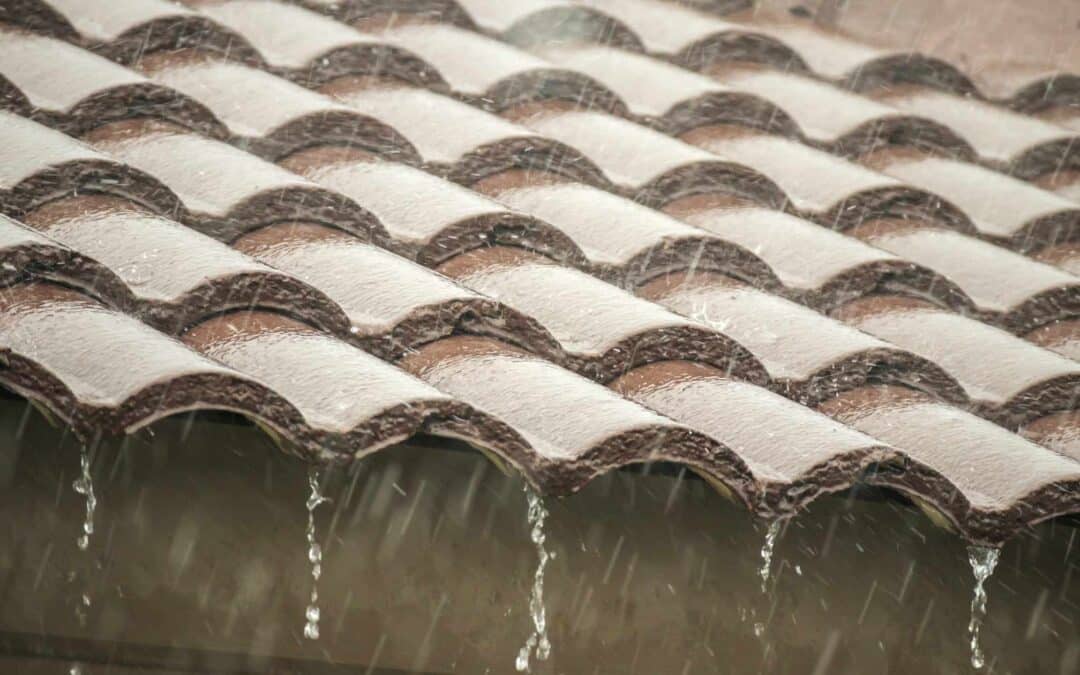
Phoenix does not usually get long stretches of gentle rain. Monsoon storms often bring sudden downpours, strong wind gusts, dust, and rain that comes in sideways.
That kind of rain finds weak points.
Water can be forced beneath roof tiles, around flashing, through seams, into roof penetrations, and across flat-roof drainage areas. A roof issue that does not leak during a light rain may leak during a hard monsoon storm because the water is being driven at the house from a different direction.
That is why homeowners should be careful about assuming a one-time leak was harmless.
The leak may still be there. The next storm may simply need to hit it the right way.
Roof Leak Damage: Will It Spread
Many homeowners imagine a roof leak as a straight line.
Water enters the roof, drips straight down, and appears directly below the leak.
In reality, water often travels before it shows up inside the home.
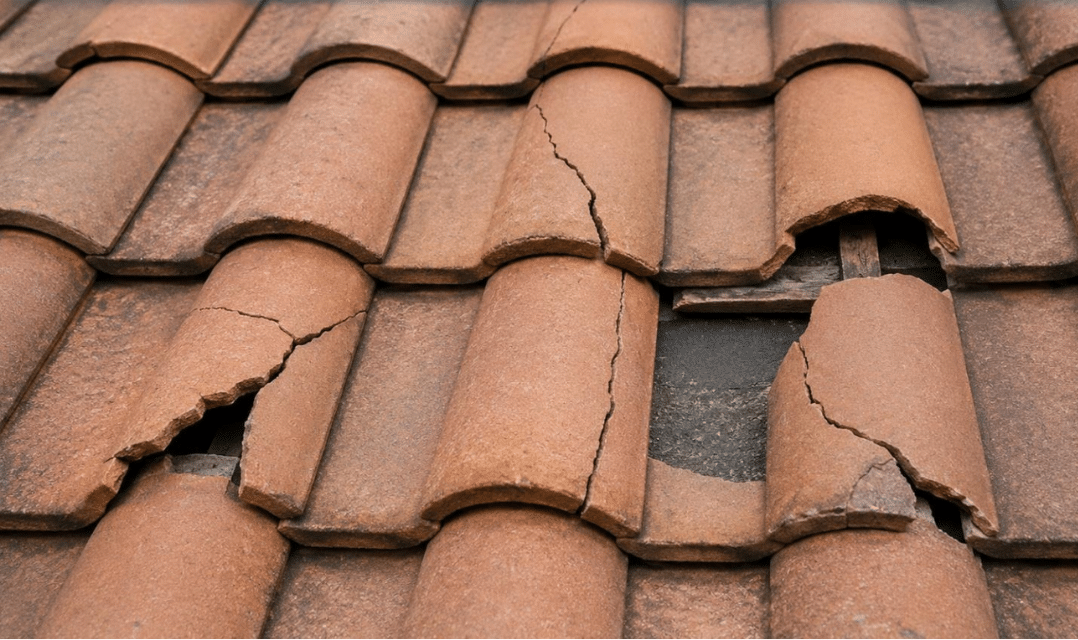
It may enter near a cracked tile, deteriorated underlayment, failed flashing, worn sealant, AC curb, pipe penetration, skylight, scupper, or roof transition. From there, it can move across the roof deck, run along framing, soak insulation, and appear several feet away from the actual entry point.
That is why the ceiling stain is usually the result of the leak, not the source.
By the time you see staining inside the home, the water may have already traveled through areas you cannot see.
What Happens When You Wait
A small roof leak may not look urgent at first. But repeated moisture creates a chain reaction.
First, water enters the roofing system. At this point, there may be no visible interior damage.
Then moisture spreads into concealed areas such as insulation, framing, or the roof deck. The homeowner may still not notice anything.
Eventually, interior signs appear:
- a ceiling stain,
- bubbling paint,
- damp drywall,
- musty odor,
- or an active drip during storms.
If the leak continues through more storms, the repair becomes more complicated. The issue is no longer just stopping the roof leak. Now the homeowner may also be dealing with damaged insulation, drywall repairs, mold concerns, paint work, flooring damage, or electrical risks.
That is where waiting gets expensive.
A Scenario Roofing Companies See Often
A homeowner calls after a storm and says:
“It’s probably just a small leak. We just want to patch it.”
Sometimes that is true. A leak can be isolated and repairable.
But during the inspection, the roofer may find that water has traveled farther than expected. The insulation may be wet. The leak may be several feet away from the ceiling stain. Or there may be more than one weak point in the roofing system.
What looked like a small repair from inside the house can become a larger project once roofing experts trace the actual water path.
Not because the original leak was dramatic, but because it was allowed to continue through multiple storms.
The Real Cost of Waiting to Repair
Many homeowners delay roof repairs because they are trying to avoid spending money. That is understandable.
The problem is that roof leaks usually become more expensive when water keeps entering the home.
| If You Address It Early | If You Wait Too Long |
|---|---|
| Smaller localized repair | Larger roof repair or replacement |
| Lower repair cost | Drywall and paint repairs |
| Less disruption | Insulation replacement |
| More repair options | Possible mold remediation |
| Faster resolution | Electrical or structural concerns |
The longer water stays active inside the roofing system, the harder it becomes to keep the repair simple.
[Read the article How Much Roof repair Costs]
When a Roof Leak Might Stay Minor
Not every roof leak turns into a major problem.
A leak may stay manageable if it is caught early, the damage is isolated, and the surrounding roofing system is still in good condition.
But you usually cannot confirm that from inside the house.
A ceiling stain does not tell you where the water entered. It only tells you where the water finally showed up.
That is why an inspection matters. The goal is not to scare homeowners into replacing a roof. The goal is to find out whether the problem is isolated or part of a larger failure.
What Phoenix Homeowners Should Ask Instead of ‘Is it Leaking?’
Instead of asking: “Is this still leaking?”
Ask: “What happens if this roof goes through two or three more monsoon storms without being checked?”
That is the better question.
Because if the leak depends on wind direction and pressure, it may not show up again until the next storm hits from the right angle.
By then, more water may have entered the system.
What Homeowners Should Do Next
If you notice a ceiling stain, musty smell, damp drywall, or a leak that only happened once, do not assume the roof fixed itself.
Start with an inspection.
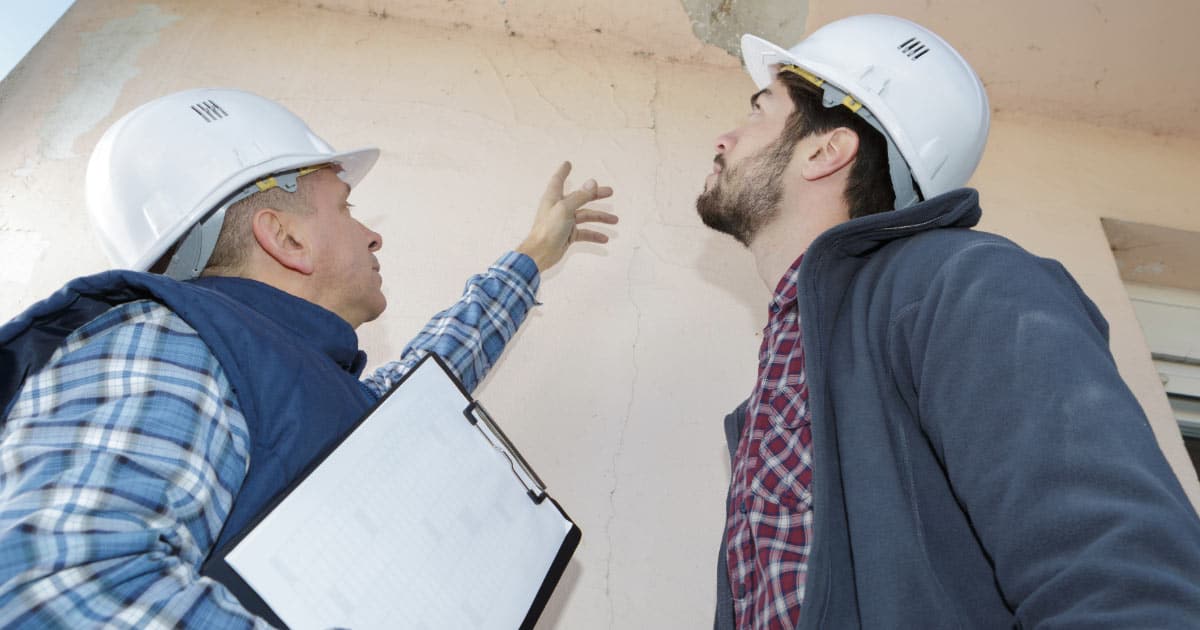
A good roof inspection should identify where water is entering, whether the damage is isolated, whether the surrounding system is still healthy, and whether a repair is likely to hold.
The goal is to stop the leak at the roof level, not just cover the stain inside the home.
Bottom Line
A roof leak during monsoon season rarely improves on its own.
In Phoenix, leaks can be intermittent because wind-driven rain exposes different weak points depending on the direction and pressure of the storm. A leak that only happened once may still be a real problem.
The earlier you understand what is happening, the more options you usually have.
Waiting until the next storm may turn a manageable roof repair into insulation damage, drywall repairs, mold concerns, or a larger roofing issue.
If your roof has leaked before, even once, the safest next step is to find out where the water entered before monsoon season tests it again.