Jeff Nickerson, Technical Roofing Consultant
Last Updated: June 24th, 2026
The Quick Answer
Most roof repairs in Phoenix typically fall somewhere between $300 and $3,500+, depending on the roof type, leak location, access, labor involved, and how much damage is found once the roof is inspected.
Smaller repairs may cost a few hundred dollars. More involved repairs, especially on tile, foam, flat, or hard-to-access roofs, can run into the low thousands.
A simple repair around a pipe or vent is very different from repairing underlayment beneath tile, tracking a leak through a flat roof system, or opening up an area and finding hidden damage.
The most important question is not only, “How much will this repair cost?” The better question is whether the repair will actually solve the problem, or if it’s just buying time.
Why Roof Repair Prices Vary So Much in Phoenix
One of the biggest misunderstandings about roof repair cost is that homeowners often compare the bill to the time they saw workers on the roof.
For example, a homeowner may pay around $500 or $600 for a tile repair, see the crew finish in 90 minutes, and wonder why the repair cost that much.
That reaction is understandable, but the visible repair time is only one part of the job.
A repair also includes the office time to schedule the work, coordinate the appointment, prepare paperwork, dispatch the crew, load tools, pick up or prepare materials, drive to the property, perform the repair, clean up, document the work, and manage the warranty or follow-up.
For most roof repairs, the material cost is usually not the biggest part of the price. Labor, coordination, travel, diagnosis, setup, insurance, trucks, tools, and the responsibility of standing behind the work all matter.
That is especially true for smaller repairs. The repair may look quick once the crew is on site, but there are often several hours of background work that happen before and after the visible repair.
Typical Roof Repair Cost Ranges in Phoenix
These are general roof repair ranges homeowners may see in the Phoenix area:
| Type of Repair | Typical Cost Range |
|---|---|
| Small roof repairs | $300–$800 |
| Mid-range roof repairs | $800–$2,000 |
| Larger or more complex repairs | $2,000–$4,500+ |
These ranges are not guaranteed. Roof type, access, hidden damage, roof height, pitch, materials, urgency, and the amount of investigation needed can all change the final price.
But they give homeowners a more useful starting point than simply saying, “Every roof is different.”
The next step is understanding how repair costs change by roof type and problem.
How Roof Repair Costs Vary by Roof Type and Problem
Roof repair costs in Phoenix depend heavily on what kind of roof you have and what kind of problem the roofer is fixing.
A cracked tile, a small flashing issue, a foam blister, a loose seam on a rolled roof, and an active leak may all be called “roof repairs,” but they require different amounts of labor, materials, access, and investigation.
The biggest cost driver is usually not just the visible damage. It is what the roofer has to do to find the problem, access the damaged area, repair the waterproofing system, and make sure the surrounding roof is still in good enough condition to hold the repair.
That is why two repairs that look similar from the ground can have very different prices once the roof is inspected.
Below are the most common roof repair categories Phoenix homeowners ask about and what usually affects the cost.

Tile Roof Repair Costs
Price range: Tile roof repairs in Phoenix often range from $500 to $2,500+, depending on how much work is involved.
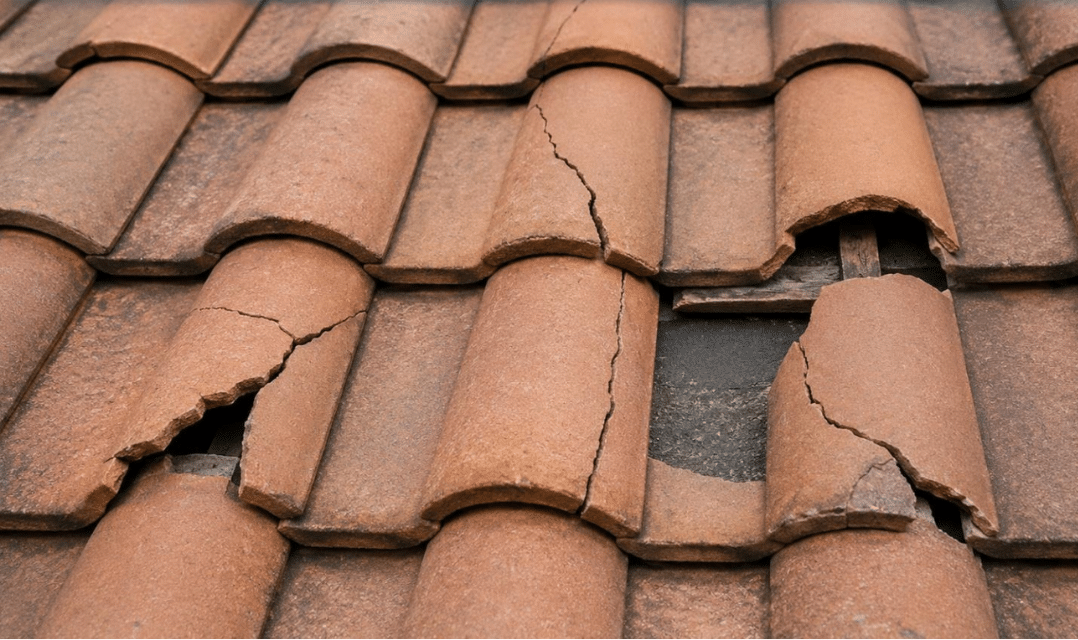
Common Problems: Common tile roof repairs include broken tiles, slipped tiles, cracked mortar balls, small isolated leaks, exposed underlayment, or damage around valleys, flashings, and penetrations.
Some tile repairs are mostly cosmetic. For example, a broken concrete tile may need to be replaced because it cracked over time, was hit by a falling branch, was struck by a golf ball, or broke from normal wear and movement. Mortar balls, which are the concrete transition pieces used in certain tile roof details, can also crumble or fall apart over time.
Those repairs may not always mean the roof is leaking.
But if a tile roof repair involves an actual leak, the job usually becomes more involved because the tile itself is usually not the main waterproofing layer. The underlayment beneath the tile is what keeps water out of the home.
What you should know: One thing that surprises many homeowners is that the tile itself is usually not the expensive part. The labor is.
On a tile roof, crews may need to carefully remove tiles, stack them, repair the waterproofing layer underneath, replace damaged components, and then reset the tile without creating new problems. That takes time, especially if the damaged area is hard to access or the tiles are fragile.
Shingle Roof Repair Costs
Price range: Shingle roof repairs in Phoenix often range from $300 to $1,500+, depending on the location of the problem and the condition of the surrounding shingles.
Common Problems: Common shingle repairs often happen around roof penetrations, such as plumbing pipes, vents, and other places where something comes through the roof. Over time, the mastic, sealant, or asphalt patching around those areas can crack, dry out, or separate.
In a simple case, the repair may involve cleaning the area and resealing or patching the penetration.
Shingle repairs can become more expensive when the surrounding shingles are brittle, curled, missing granules, or difficult to tie into. Phoenix heat and UV exposure can age shingles faster than many homeowners expect. If older shingles crack or break during repair work, the job may involve more than the original leak area.
A small penetration repair may be simple. A shingle repair on an older, brittle roof may not be.
Flat and Rolled Roof Repair Costs
Price range: Flat or rolled roof repairs in Phoenix often range from $500 to $2,500+, depending on the system, the leak location, and whether water has traveled beyond the visible problem area.
Common Problems: On rolled or built-up roof systems, one common issue is seam failure. Sometimes the seam lifts and creates a small opening or buckle. Roofers may refer to this as a “fish mouth” because the lifted seam can look like the open mouth of a fish.
If the problem is small and isolated, the repair may involve fastening the lifted area and applying the proper patching material over the seam.
Flat roof leaks can also be tricky because water does not always show up directly below where it entered. On a flat or low-slope roof, water can travel horizontally through or under the system before it appears inside the home. That means the leak you see inside may be 10 or 20 feet away from the actual entry point.
That is why flat roof repair cost often depends on how much investigation is needed, not just how large the visible leak appears.
Foam Roof Repair Costs
Price range: Foam roof repairs in Phoenix often range from $500 to $2,000+, depending on the condition of the coating and whether the foam itself has been exposed or damaged.
Common Problems: Common foam roof issues include cracks, blisters, punctures, worn coating, ponding water, and damage around scuppers, drains, AC units, and roof penetrations.
A foam blister may look like a raised hump in the roof surface. The blister itself may not always be an immediate problem, but it can become one if it cracks, hardens, or gets stepped on. In many cases, the damaged area can be cut, flattened, sealed, and patched.
Foam roofs can often be patched or recoated when issues are caught early. But if the protective coating has worn away for too long and the foam has become badly deteriorated, a simple repair may no longer be enough. At that point, the project can become more involved because the damaged surface may need additional preparation before it can be properly repaired or recoated.
Flashing and Penetration Repair Costs
Flashing and penetration repairs often range from $300 to $1,500+, depending on the location, access, and amount of surrounding damage.
Flashing protects some of the most vulnerable areas of the roof, including vents, skylights, chimneys, roof transitions, walls, parapets, and other penetrations. When flashing fails, leaks often follow.
The good news is that flashing-related problems can sometimes be repaired before they become major issues, especially if they are caught early. The cost depends on where the flashing is located, how difficult it is to access, whether surrounding materials are still in good condition, and whether water has already caused damage underneath.
Wall flashing can be especially tricky. Sometimes the problem is not the roof field itself, but the transition where the roofing material meets a wall. If that transition fails, the leak can be harder to diagnose and may require more careful investigation.
Roof Leak Repair Costs
Roof leak repairs often range from $400 to $4,000+, depending on the cause and how long the leak has been active.
A small, recent leak around a vent or flashing detail may be fairly straightforward. A leak that has been active through multiple storms can be more complicated because water may have traveled beyond the original entry point.
That is why the visible stain inside the home does not always tell the full story. A ceiling stain shows where water finally appeared, but it does not always show where water entered the roof.
Leaks can also come from more than one area. A homeowner may think there is one leak, but an inspection may show multiple weak points, especially if the roof is older or has had previous repairs.
If the leak is caught early and the surrounding roof is healthy, the repair may stay relatively contained. If the leak has spread into insulation, decking, underlayment, wood, or multiple roof areas, the cost can increase quickly.
What Actually Changes the Price of a Roof Repair?
Several practical factors can move a repair toward the low end or high end of the range.
This is where homeowners should slow down and look beyond the first number. A repair is not just priced by the size of the visible problem. It is priced by access, diagnosis, labor, roof type, hidden damage, and whether the repair is likely to hold.
The Size and Location of the Problem
A small, isolated problem usually costs less than a widespread issue, but the visible damage does not always match the real damage.
A small ceiling stain may be connected to a simple flashing issue, or it may be the result of water traveling several feet through the roofing system before it showed up inside the home.
That is why inspection matters.
Roof Access and Difficulty
Some roofs are simply harder to work on.
Costs can increase when the roof is steep, two stories high, difficult to access, surrounded by obstacles, or built with complex slopes, valleys, parapet walls, or multiple roof sections.
That is not an upsell. It usually means the work takes more time, more care, and more safety planning.
The Type of Roof
Different roofing systems require different repair approaches.
Shingle repairs are often faster when the damage is easy to access and the surrounding shingles are still in good condition. Tile repairs are usually more labor-intensive because crews may need to remove and reset tile to reach the waterproofing layer underneath. Foam repairs depend heavily on the condition of the coating, drainage, previous patches, and whether the foam has been exposed to UV for too long.
Flat roof repairs can be tricky because water may travel horizontally before appearing inside the home.
Hidden Damage
Hidden damage is one of the biggest pricing variables.
Sometimes the repair is exactly what it looked like from the surface. Other times, once the area is opened, the roofer may find wet insulation, damaged decking, deteriorated underlayment, rotted wood, or a larger problem than expected.
That does not happen on every job, but it happens often enough that homeowners should understand why estimates can change once the roof is opened.
When a Roof Repair Makes Sense
A roof repair usually makes sense when the problem is isolated, the surrounding roofing system is still in good condition, and the repair is likely to hold.
For example, a repair may be reasonable when:
| Situation | Why Repair May Make Sense |
|---|---|
| A few tiles are broken | The damage may be isolated and cosmetic |
| A pipe or vent needs resealing | The issue may be localized |
| A flat roof seam has lifted | The seam may be repairable if the surrounding roof is healthy |
| A foam blister or small crack is caught early | The area may be patched before larger deterioration occurs |
| A leak source is clearly identified | The roofer is not guessing |
| The rest of the roof has meaningful life left | The repair is not being tied into a failing system |
In these cases, a repair can extend the life of the roof and help the homeowner avoid a larger project before it is necessary.
When Repair Costs Start Becoming a Warning Sign
A repair becomes more questionable when the roof is older, leaks are recurring, or problems are showing up in different areas.
This is where homeowners sometimes spend more than they realize. One repair may feel manageable. Then another leak appears the next season. Then a different section needs work after the next storm.
After a few years, the homeowner may have spent several thousand dollars without actually solving the larger issue.
That does not mean every older roof needs replacement. But once repairs become frequent or expensive, it is worth asking whether the roof still has enough life left to justify the next repair.
If a repair starts moving beyond a few thousand dollars, or if it starts turning into a full slope or major section replacement, the homeowner should compare that repair against the cost and value of a larger roof project.
The Question That Matters More Than Price
Most homeowners start with: “How much will this repair cost?”
That is a fair question, but the better question is: “If I pay for this repair, what problem is it actually solving?”
A $700 repair may be a great decision if it fixes an isolated issue on an otherwise healthy roof. A $2,500 repair may also be reasonable if it buys several more years of reliable performance.
But even a “cheap” repair can be a poor decision if the roof is failing in multiple areas and the repair only delays the inevitable for a short time.
How to Compare Roof Repair Options
A good roofing contractor should be able to explain the repair in plain language.
Before approving the work, homeowners should understand:
| Question | Why It Matters |
|---|---|
| What caused the problem? | You want to fix the source, not just the symptom |
| Is the issue isolated or widespread? | This determines whether repair is likely to hold |
| What exactly is being repaired? | Vague repairs make it hard to compare options |
| What materials will be used? | Materials affect durability and compatibility |
| What happens if hidden damage is found? | This can change the final cost |
| Is the repair warrantied? | Repair warranties are usually more limited than replacement warranties |
| How much life does the rest of the roof have? | This helps determine whether the repair makes financial sense |
The goal is not to pressure homeowners into a bigger project. The goal is to make sure the repair matches the real condition of the roof.
[Read the article How to choose a roofing contractor in Phoenix]
Bottom Line: Roof Repair Cost Depends on What the Roofer Finds
Most roof repairs in Phoenix fall somewhere between $300 and $3,500+, but the number alone does not tell the whole story.
What matters most is what caused the issue, how contained the damage is, what type of roof you have, whether hidden damage is present, how much labor is involved, and whether the repair will actually solve the problem.
Sometimes a small repair is exactly the right move. Sometimes a larger repair is still reasonable. And sometimes repeated repairs are a sign that the roof is reaching the point where replacement should be part of the conversation.
What to Do Next
If you are trying to estimate roof repair cost, the next step is not guessing from the ground.
Start with an inspection.
A good roofer should show you what is happening with photos or video, explain the issue clearly, tell you whether repair makes sense, and walk you through your options without pressure.
That way, you are not making the decision based only on a number. You are making it based on the actual condition of the roof.