Paul Huckins, HOA Technical Roofing Consultant
Last Updated: July 2026
The Quick Answer
Your tile roof underlayment may be failing if you notice ceiling stains, recurring leaks, leaks during wind-driven monsoon storms, repeated repairs in the same area, broken or slipped tiles, brittle material near roof edges, or signs of wood damage beneath the roof.
The condition of tile roof underlayment is difficult to tell from the ground.
On a tile roof, the tile is what you see. The underlayment beneath the tile is the main waterproofing layer protecting your home. The tile helps shed water and protect the roof system, but water can still get underneath it. When the underlayment ages, cracks, curls, dries out, wears down, or fails, your roof can leak even if the tile still looks fine from the street.
In Phoenix, this matters because heat, sun exposure, thermal movement, monsoon storms, and poor water-management details can all affect the hidden layer beneath the tile.
Why Tile Roof Underlayment Fails
Tile roofs are common throughout Phoenix and surrounding communities like Scottsdale, Gilbert, Peoria, and Cave Creek. Homeowners often assume tile roofs last for decades because the tile itself is durable.
That is partly true.
Concrete and clay tiles can last a long time when they are not broken, displaced, or damaged. But the tile is not the only part of the roof system. Beneath the tile is the underlayment, and that underlayment is usually what determines when a tile roof starts having water problems.
The simplest way to think about it is this: The tile is the armor. The underlayment is the waterproofing.
The tile protects the roof from sun, debris, and direct weather exposure. It also gives the home its appearance. But when rain gets beneath the tile, the underlayment is supposed to direct that water down and off the roof.
If water repeatedly runs across felt or asphalt-based underlayment, it can slowly wear away the materials that help it shed water. Think of it like a pair of jeans that gets washed and worn over time. Eventually, the fabric weakens and holes can begin to form.
If that layer is no longer doing its job, the roof can leak even though the tile still looks normal.
But age is just one reason underlayment fails. A tile roof can develop problems early if the original installation was poor, the wrong underlayment was used, flashing details were missed, or water was allowed to run in the wrong places beneath the tile.
That is why two homes of the same age can perform very differently. One may have a roof system that was carefully installed with the right materials and details. Another may have cheaper materials, poor flashing, or weak drainage details that cause water to damage the underlayment much sooner.
For Phoenix homeowners, this is important. If a roof is leaking earlier than expected, the issue may not be that the tile itself failed. It may be that the underlayment, flashing, valley, wall transition, or water-management details were not installed correctly from the beginning.
Why Phoenix Is Hard on Tile Roof Underlayment
Phoenix creates a tough environment for tile roof underlayment.
The roof surface is exposed to long periods of intense sun and high heat. The area beneath the tile can also hold heat for long periods, especially when ventilation is poor or the roof system traps warm air. Over time, heat can dry out and harden older or lower-grade underlayment materials.
Temperature swings also matter. Roofing materials expand and contract as temperatures change between day and night and across seasons. That movement can stress seams, laps, fasteners, flashings, and brittle underlayment.
Then monsoon storms test the system.
A tile roof may not leak during a light rain. But wind-driven rain can push water under the tile from a different direction or with more pressure. Water may find weaknesses near valleys, roof-to-wall transitions, vents, skylights, pipes, chimneys, eaves, or old repair areas.
This is why a leak may show up once and then seem to disappear. The roof may not have fixed itself. The next storm may simply not have pushed water through the same path.
[Read more on Why Roofs Fail Faster in Phoenix.]
Water Should Not Be Allowed to Run Wild Under the Tile
This is one of the most important things homeowners should understand about tile roofs.
Tile roofs are designed to shed most of the water on top of the tile. Some water can still get beneath the tile during storms, especially with wind-driven rain. When that happens, the roof system should direct the water safely through valleys, flashings, channel metals, and other drainage details.
Problems happen when water is allowed to run across the underlayment again and again.
Over time, repeated water flow can wear down felt or asphalt-based underlayment. One way to think about it is like washing the same piece of fabric over and over. The more it gets washed, the more the material weakens. On a roof, repeated water movement can speed up deterioration and eventually create a leak path.
This is why valleys, dead valleys, roof-to-wall transitions, and other water-heavy areas matter so much. These areas carry more water than the middle of a roof slope. If they are not detailed correctly, they can wear out the underlayment faster than the rest of the roof.
A roof may have one area that leaks badly while the rest of the roof is still in reasonable condition. That does not always mean the entire roof is failing. It may mean water is being concentrated or misdirected in one vulnerable area.
Common Signs Tile Roof Underlayment May Be Failing
A single sign does not always mean the entire underlayment system has failed. But several signs together usually deserve a closer inspection.
A ceiling stain or water spot is one of the most common signs homeowners notice first. The stain may appear as a brown ring, discoloration, bubbling paint, soft drywall, or a damp area after rain. On a tile roof, the stain does not always appear directly below the place where water entered. Water can travel along framing, underlayment, decking, insulation, or other roof components before it finally shows up inside.
Leaks during monsoon storms are another warning sign. If your roof leaks during heavy wind-driven rain but not during every storm, the underlayment may still be part of the problem. Intermittent does not mean harmless.
Repeated repairs in the same area can also point to a larger issue. A contractor may replace a broken tile, seal a small area, or address one visible problem. But if water is being directed incorrectly under the tile, or if the underlayment beneath that area is already compromised, the leak may return.
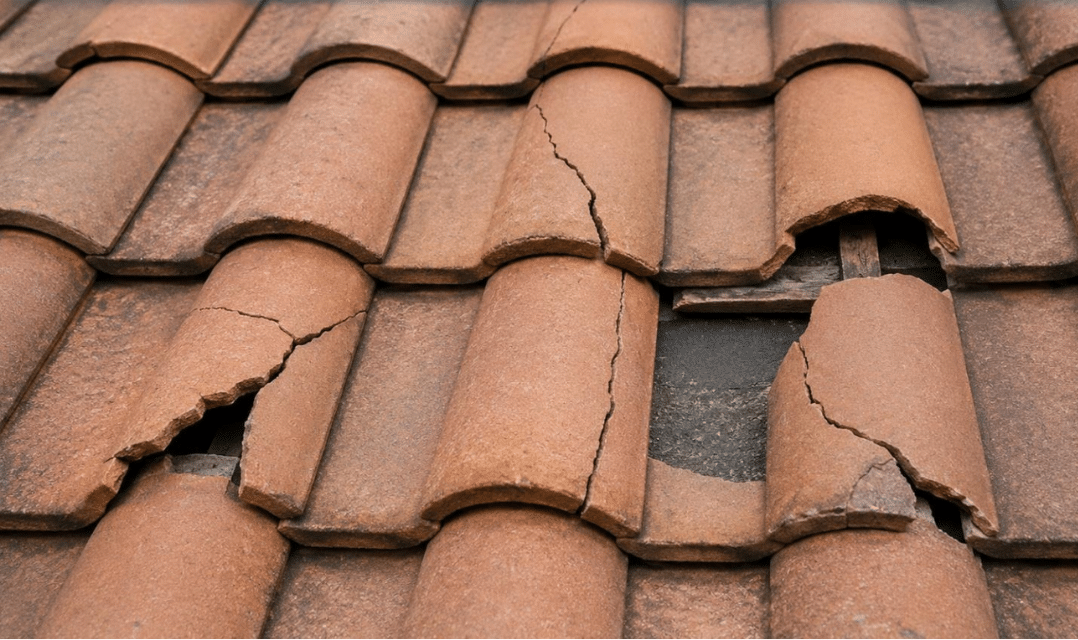
Broken, slipped, or missing tiles should also be taken seriously. They do not automatically mean the underlayment has failed, but they expose the system beneath to more direct sun, weather, and water. In Phoenix, exposed underlayment can take a beating from UV and heat.
Sometimes underlayment condition can be seen near roof edges, eaves, transitions, or areas where tile has shifted. If the material looks dry, cracked, curled, torn, or brittle, that can be a warning sign.
The clearest evidence may only appear after tile is lifted. If a contractor finds soft wood, dry rot, staining, or moisture damage beneath the roof, that usually means water has been getting past the tile and underlayment long enough to affect the structure below.

Be Careful with Vague “Synthetic Underlayment” Claims
If your tile roof underlayment needs replacement, pay close attention to the exact material being proposed.
The word “synthetic” by itself is not enough.
There are different types, grades, and uses for synthetic underlayments. Some products may be appropriate for certain roof systems, while others may not be the right choice under tile in Phoenix heat.
This matters because tile roofs are not the same as shingle roofs. A product that works in one application may not be the best choice for another. If a contractor simply says “synthetic underlayment,” ask what product is being used, what it is rated for, and why it makes sense under tile.
The cheapest underlayment can make a proposal look attractive upfront, but the roof system still has to perform after years of heat, water movement, and monsoon exposure.
For Phoenix tile roofs, the underlayment decision should be specific. The proposal should tell you what material is being used, how it will be installed, and why it fits your roof.
Why Inspection Matters
A ground-level look can identify obvious issues such as broken tiles, slipped tiles, missing ridge pieces, debris buildup, or visible damage.
But it usually cannot tell you the condition of the underlayment beneath the tile.
That is the problem with tile roofs. The most important waterproofing layer is hidden.
A drone may help identify visible roof issues, but drone photos still cannot fully evaluate underlayment condition if the tile is covering it. In many cases, the contractor needs to safely access the roof and, when appropriate, lift selected tiles to inspect what is happening beneath them.
Even then, one small inspection area does not always tell the full story. The contractor should use roof age, leak history, visible conditions, attic or interior evidence, and selected inspection points to understand whether the problem is isolated or more widespread.
A complete inspection should also consider nearby walls, windows, stucco, transitions, and flashing details. Not every leak near a tile roof is automatically caused by the roof underlayment. Water can sometimes enter through wall details, windows, stucco cracks, missing wall flashing, or other areas above the roofline.
That does not mean the roof should be ignored. It means the inspection should be complete.
Repair, Section Replacement, or Full Underlayment Replacement?
Not every tile roof leak means the entire roof needs to be replaced.
A repair may make sense when the issue is limited to a specific broken tile, flashing detail, vent, small transition, or localized leak area. This is more likely if the rest of the roof appears to be in serviceable condition and there is no evidence of widespread underlayment failure.
But a repair should come with clear expectations. If the underlayment is aging across the roof, or if poor water management is wearing out one area, a repair may stop one leak without solving the larger issue.
Sometimes one roof slope or one section has failed faster than the rest of the roof. This may happen because of sun exposure, drainage patterns, valleys, dead valleys, previous repairs, installation differences, or concentrated storm wear. In that case, replacing underlayment in one section may be reasonable.
A full tile remove-and-replace, often called a tile lift-and-reset, may be needed when the underlayment is failing across multiple areas. This involves removing the tile, replacing the failed underlayment, addressing damaged decking or components, and reinstalling the tile where possible.
This can be a major project, but it may be the right solution when the visible tile still has life left and the hidden waterproofing layer beneath it has reached the end of its useful service life.
For more on choosing between repair and replacement, see our article on Roof Repair vs. Replacement in Phoenix.
What Happens If You Wait Too Long?
Waiting can be reasonable if the roof is being monitored, the issue is minor, and a contractor has explained the risks.
But ignoring underlayment failure can make the eventual repair more expensive.
Water that gets past failed underlayment may damage the roof deck, fascia, insulation, drywall, paint, flooring, or other parts of the home. It may also create repeated leak problems that become harder to trace after multiple short-term repairs.
The risk is not only the leak you see. It is the damage you may not see yet.
A small ceiling stain may be the first visible sign of a problem that has been developing beneath the tile for a long time.
How This Connects to Choosing the Right Underlayment
If your underlayment is failing and a larger project is needed, the next decision is not simply whether to replace it. It is what underlayment should be used next.
For Phoenix tile roofs, homeowners should be careful about choosing underlayment based only on the lowest price. Heat, water movement, valleys, wall transitions, and monsoon storms all make underlayment quality important.
A better roof system usually comes from the right underlayment, proper flashing details, good water management, careful installation, and clear workmanship standards.
For more detail, see our guide to The Best Tile Roof Underlayment for Phoenix Homes.
Bottom Line
Your tile roof underlayment may be failing if you see ceiling stains, recurring leaks, storm-driven water intrusion, repeated repairs, broken or slipped tiles, brittle exposed material, or signs of wood damage beneath the roof.
But the most important thing to understand is that tile roofs can be deceptive.
The tile may still look good while the underlayment beneath it is aging, worn, poorly installed, or being damaged by water moving in the wrong places. Because that hidden layer is what protects your home from water, it should be evaluated carefully before you decide whether to repair, replace a section, or move forward with a full tile lift-and-reset.
The goal is not to scare you into replacing your roof. The goal is to understand whether the waterproofing layer beneath your tile is still doing its job.
What to Do Next
If you suspect your tile roof underlayment may be failing, start with an inspection.
At Renco Roofing, we look at the visible tile, roof details, leak areas, transitions, valleys, penetrations, water-heavy areas, and interior signs of water intrusion. When appropriate and safe, we may also evaluate selected areas beneath the tile to better understand the condition of the underlayment.
Then we explain whether the issue appears isolated, whether a repair may be reasonable, whether one section needs attention, or whether a larger underlayment replacement should be considered.
A tile roof should not leave you guessing. If the hidden waterproofing layer is failing, the sooner you understand it, the better decision you can make for your home.